

Where Is the Bottom of the Gunboat ‘Philadelphia’?
Why is the gunboat “Philadelphia” flat-bottomed? A look at how America’s oldest surviving warship was built, and what conservators are finding inside it today
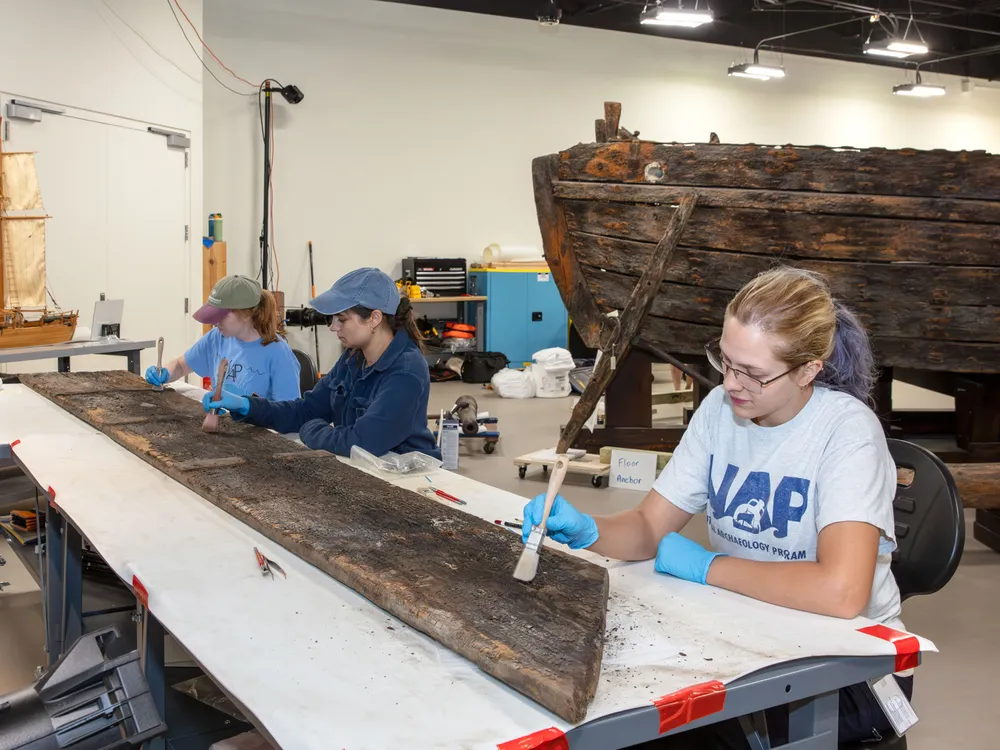
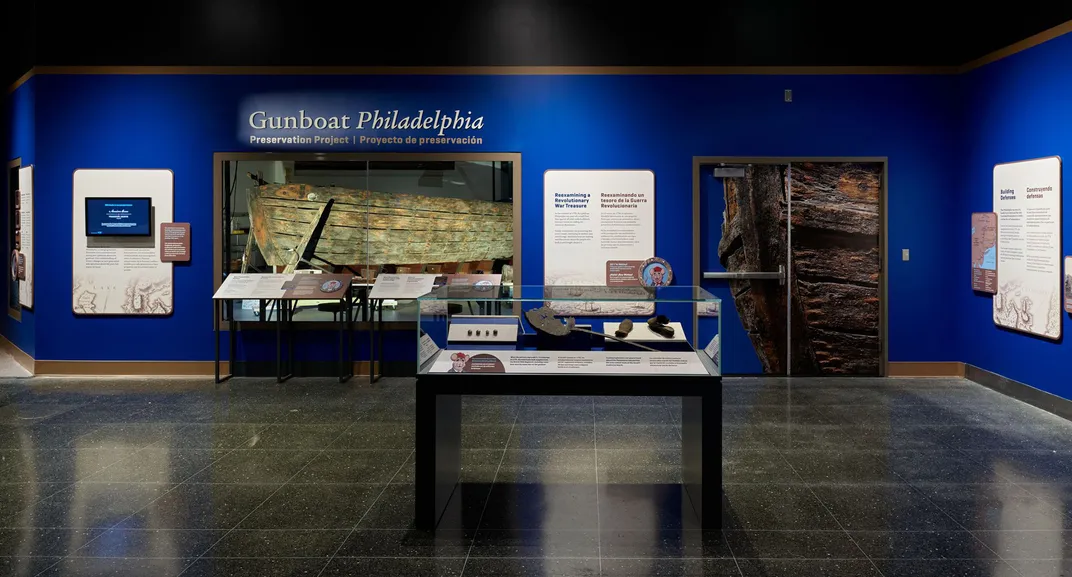
This year, visitors to the National Museum of American History have been able to see the gunboat Philadelphia, built during the American Revolution, in a new and unique way. A large window allows the public to not only watch the conservation work in progress, but to view the gunboat more clearly than has been possible in more than 60 years.
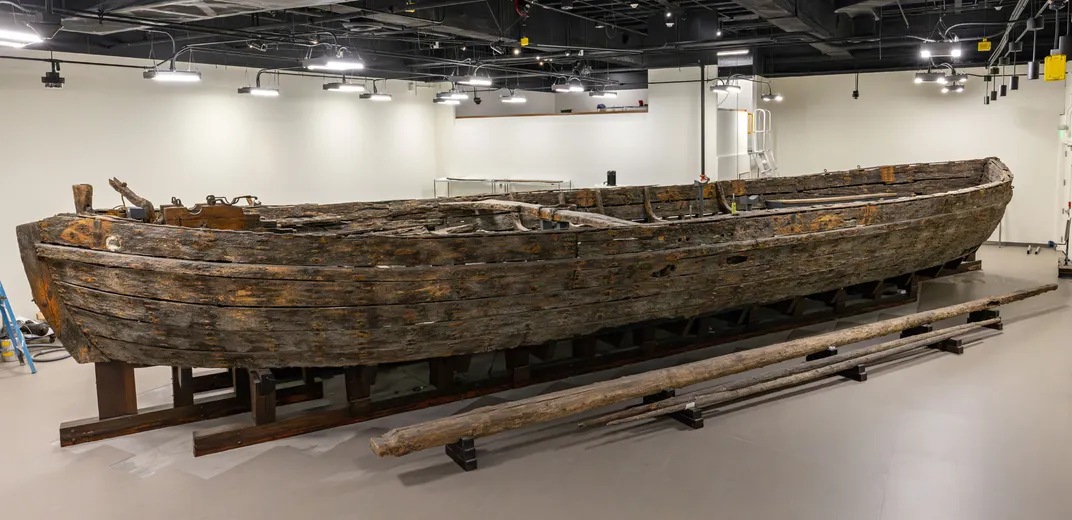
One of the striking things about seeing the gunboat in its brand-new conservation space—free from all the walls, labels, and low lighting normally required for a long-term exhibition—is that you can clearly see the bottom of the hull. More precisely, you can see where the side planking abruptly stops. My brain wants to continue the lines of more traditional ship design—a sweeping curve that you’d see in sailing ships and modern boats—and conclude that the bottom half of the hull must be missing. Where did it go?
If your brain asks the same question, you’re not alone. It’s a common question our visitors have about the gunboat, somewhere between “why did it sink?” and “wait, you mean that Benedict Arnold?”. (Don’t worry; we’ll get to that.)
The answer is that the rest of the hull isn’t missing; it was never there in the first place. Unlike ocean-going ships that need a long keel and deep draft for stability in rough seas, the Philadelphia was designed to float and fight in the shallower waters of Lake Champlain and the Hudson River Valley. A deep, curving hull would be a liability, limiting where the ship could sail and increasing the risk of running aground. So, the Philadelphia and her seven sister ships were designed with a flat bottom, allowing them to sail in water as shallow as three feet.
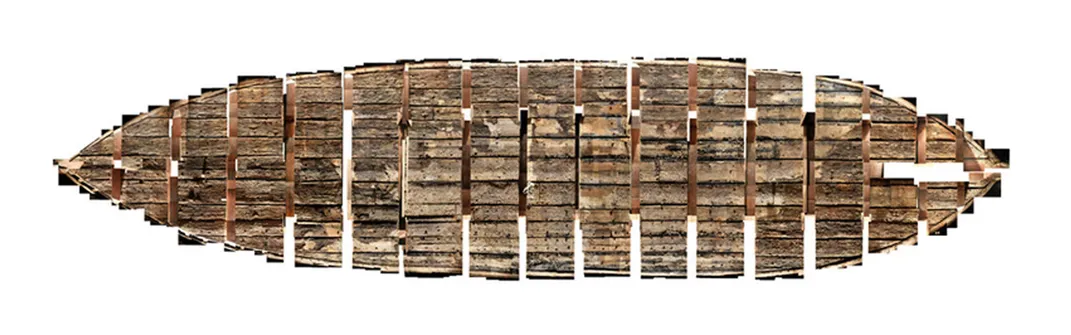
That design of the gunboats also reduced construction time, which was a major concern in the summer of 1776 as British reinforcements from Quebec continued down the Hudson Valley and started assembling their own prefabricated ships, including their own gunboats, shipped from England (IKEA-style, minus the Allen wrench). In contrast, the Philadelphia was built from scratch, on site, from mostly local materials in a blisteringly quick two-and-a-half weeks.
As with all things, this design decision came at a cost. The same feature that allowed the gunboats (also called gundalows, gundolas, or gondolas) to operate in shallow water also meant that they were not very maneuverable and tended to be pushed along the surface of the lake by strong winds. With only a single mast and two sails, the sailors often had to use oars to get the gunboat where they wanted it. General Benedict Arnold, at that time still very much a hero of the Colonial cause (his betrayal was years away; I told you we’d get to that) and in command of the Lake Champlain fleet, commented about this in a message on September 9, 1776: “Now I think we are very safe from gales of wind & this anchorage good. Several small harbors in the vicinity where the gundolas will ride safe any wind that blows.”
The Battle of Valcour Island began on October 11, 1776. Outnumbered two-to-one and severely outgunned, the Continental navy’s 15 ships, including Philadelphia and the seven other gunboats, had little chance of defeating the British fleet. But the tenacity and cunning of the colonial sailors over three days of battle frustrated and delayed the British just long enough that, as an early winter approached, they postponed their southern advance until the spring of 1777. That delay gave the beleaguered colonial forces crucial time to regroup, which enabled their pivotal victory in the Battle of Saratoga, convinced France to ally with the fledgling new nation, and ultimately helped Colonial forces win the Revolutionary War.
That’s a lot of pressure to put on a 53-foot-long boat.
Sadly, the Philadelphia’s part in securing the country’s future ended on the first day of the battle, and she sank at around 6:50 p.m. Arnold wrote in his after-action report that “the Philadelphia was hulled in so many places that she sunk about one hour after the engagement.”
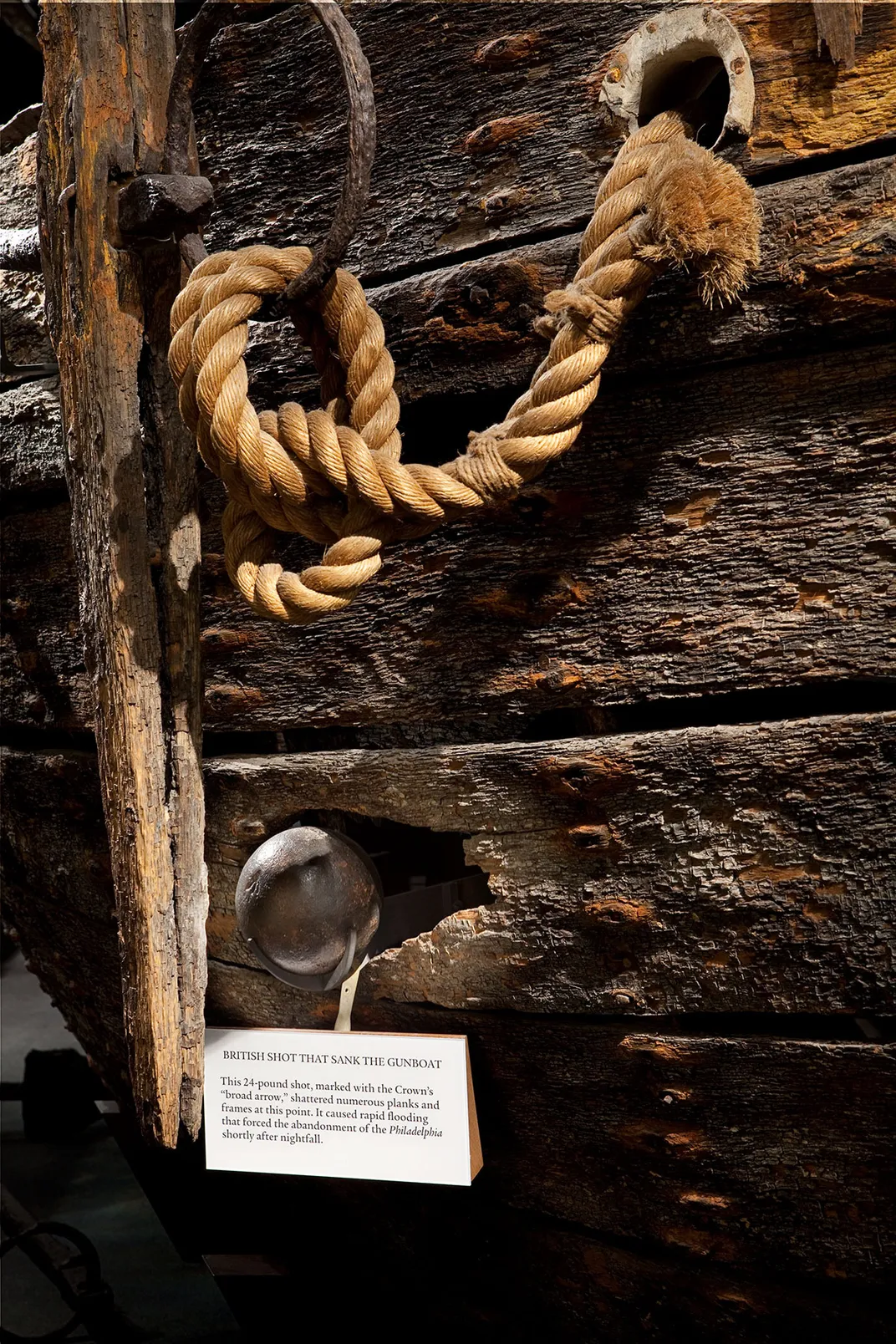
In fact, we now know what Arnold didn’t: the Philadelphia was sunk by a single, well-placed 24-pound British cannonball that hit just below the waterline. The hole can be seen in the gunboat today.
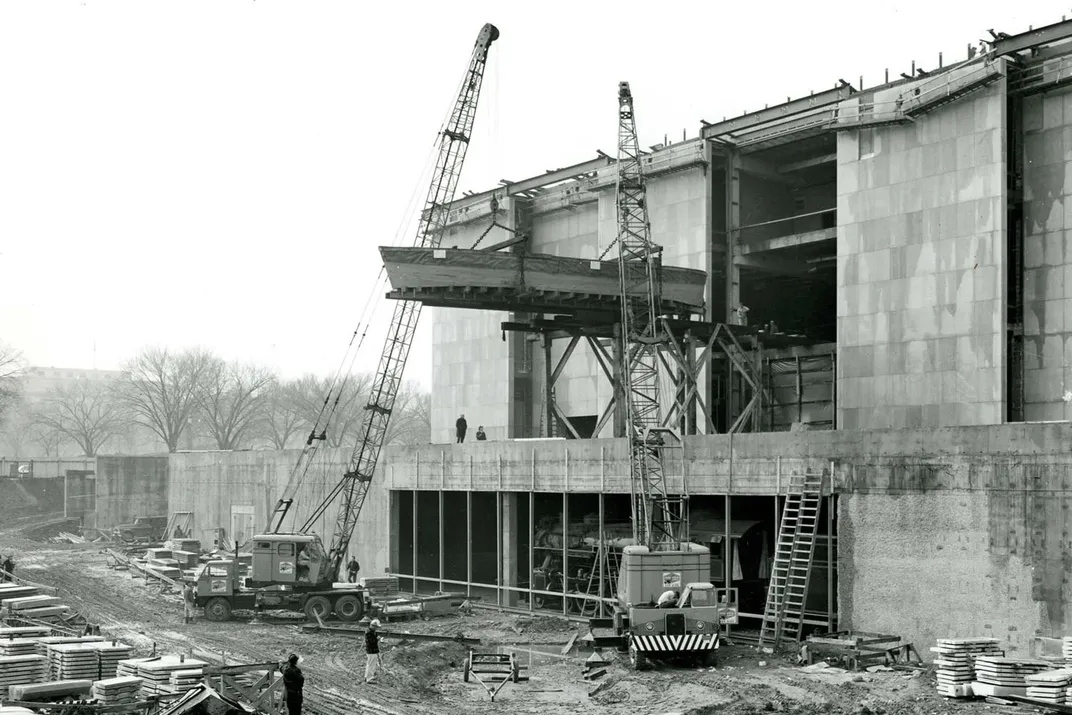
We know these details of the gunboat Philadelphia not just from historical accounts, but also from conservation work. 250 years after she was sunk, more than 90 years after she was raised from the bottom of Lake Champlain, and more than 60 years after she was lifted by crane through the side of a then yet-to-be-completed museum, the gunboat is still teaching us about the ship and her crew. But to get there, it had to be deep cleaned for the first time.
Conservator Alyssa Carpenter discovered a Revolutionary-era, three-holed leather button.
“I was cleaning near the bow and angled a small vacuum attachment between the narrow floorboards. The attachment was just small enough to pick up the button,” Carpenter said. “At first, I thought the vacuum was clogged by a small piece of wood, but upon closer inspection, I realized it was a dried-out leather button from the gunboat’s era. It may have once been attached to someone’s uniform, making it a small but meaningful connection to the people who lived and worked aboard the ship.”
Conservator Marissa Agerton found a tangible reminder about the hurried nature of the gunboat’s construction.
“After removing the bulk of the mud from the midship area we can see more of the internal gundeck structure, like the end of a nail coming through the sole planking that was clearly meant to secure the planking to the frame below but missed its mark,” Agerton said. “This reiterates what we know from the historical records about Philadelphia being constructed in such a short period of time by soldiers who had limited experience building boats. It made me stop and remember that the people from the Revolutionary War were humans just like us trying to do the best they could with the resources they had.”
What will we find next? Stop by the museum and you can watch our team of conservators and other museum staff as they continue the work of preserving the gunboat Philadelphia for the next 250 years of visitors. You can also keep up with all the project updates online.
Dave McOwen is a digital experience specialist in the museum’s Office of Digital Access and Archives.
The conservation of America’s oldest surviving warship is expected to be completed in March 2027.
Lead support for the preservation of the gunboat Philadelphia is generously provided by Americana Corner; a Save America’s Treasures grant from the Historic Preservation Fund administered by the National Park Service, Department of the Interior; and Rutledge Family Foundation.