

September 11: Photography and the News
As the 25th anniversary of September 11, 2001, draws near, these objects from the museum’s Photographic History Collection show how photography has served to document, record, shape and transmit experiences that connect the tragedy and its legacy to American life
/https://tf-cmsv2-smithsonianmag-media.s3.amazonaws.com/filer_public/eb/35/eb35205a-800e-4968-a2a7-287ceb76078b/ahb2019q046654_1.jpg)
When a friend of mine learned I was writing a series of articles about September 11 and photography, she sent me a box of newspapers. For almost a quarter of a century, she held onto these pages as a tangible connection to September 11. While living through those uncertain early days, collecting newspapers helped her wrestle with the massive scope of the event, making it personal and manageable.
She anticipated the news coverage would become historical, and she wasn't the only one. In the museum’s collection, we have many examples of photography engaging with news accounts of September 11 that show photographers personalizing their relationship to news of the attacks and subsequent events.
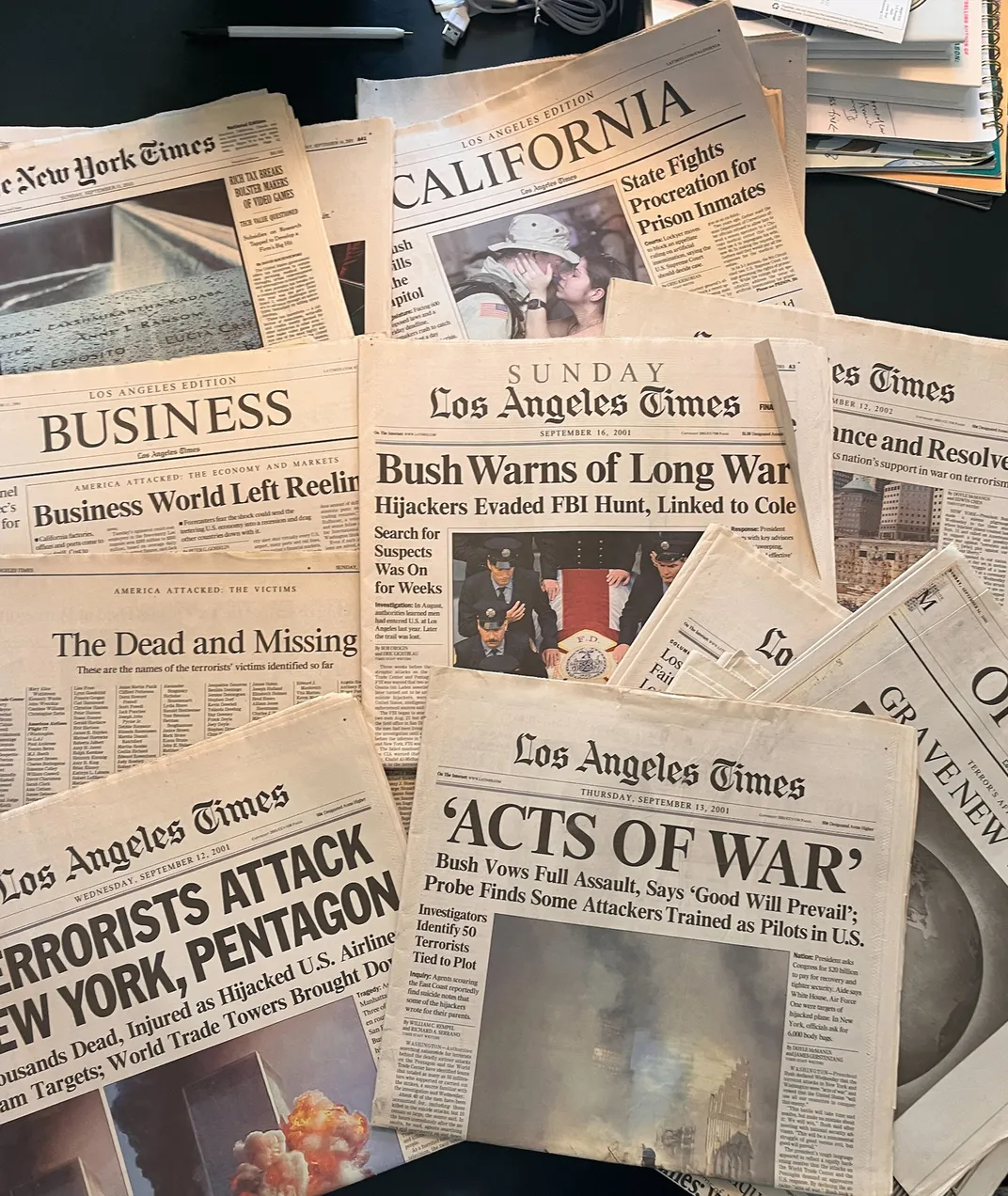
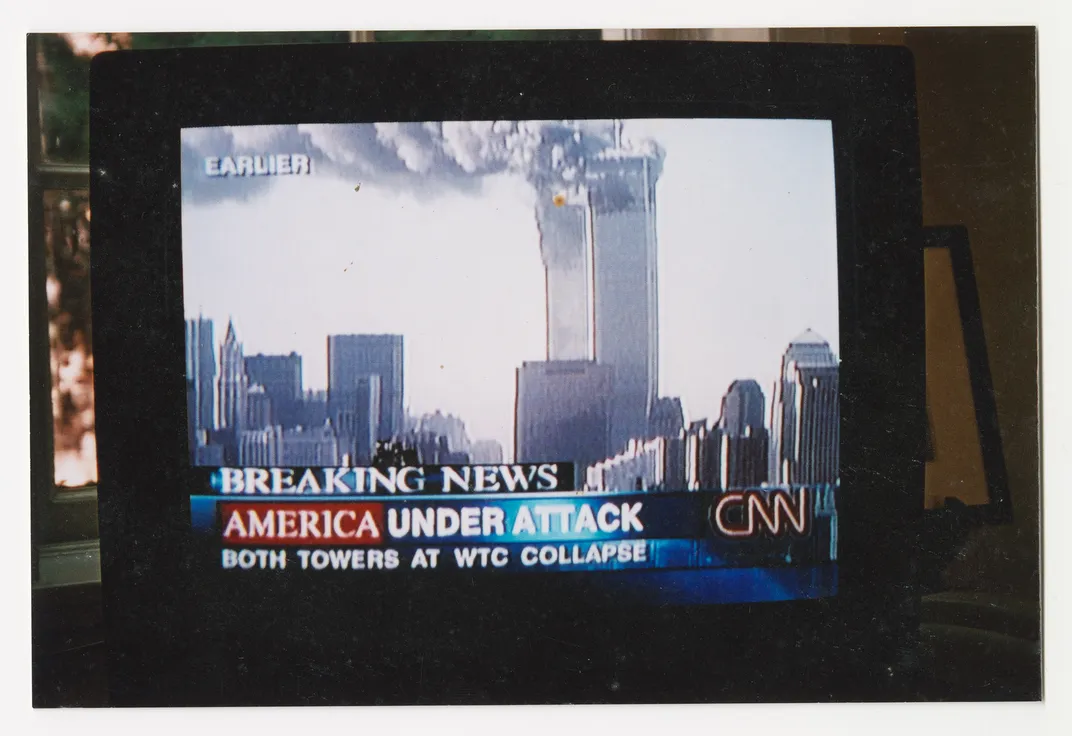
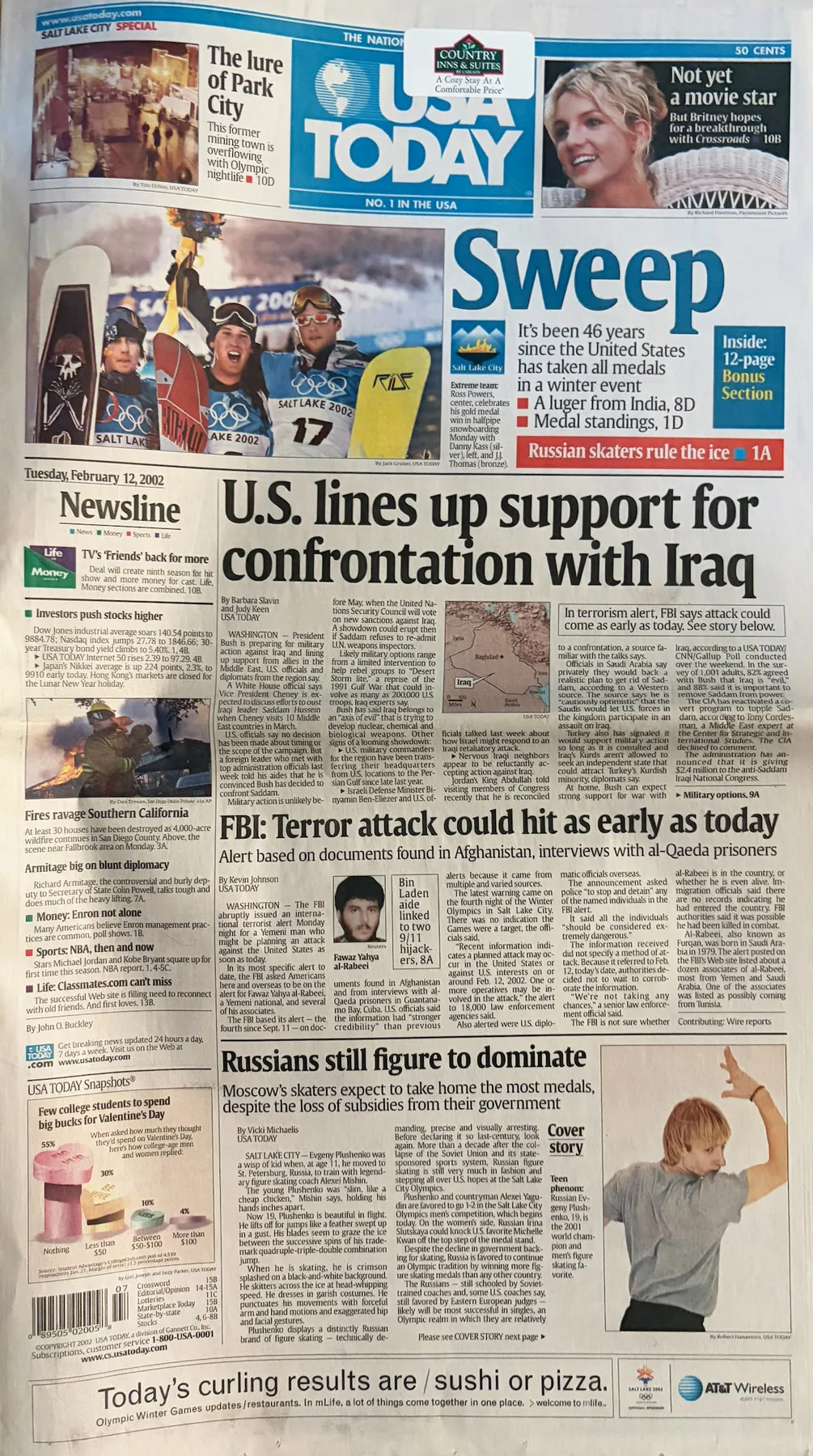
As I look at the newspapers my friend gave me, I’m struck by the February 12, 2002, issue of USA Today. While stories related to September 11 dominate the front page, they are surrounded by articles focused on normal life. The front page makes me consider the coexistence of the joy and mundanity of daily life—how Americans returned to their normal lives after enduring a national tragedy and personal trauma. And I wonder when editors and publishers decided that September 11 news, history, and experience would become just part of everyday life.
Today, news arrives via push notifications to the phones in our hands. As a result, we don’t see the varied stories of a newspaper page in the same way. Some folks still subscribe to a newspaper; however, print delivery has dropped by more than half in the last 20 years. The closest many of us, including me, now come to newsprint is a periodic scan of what’s above the fold in the stacks on our way out of the grocery store.
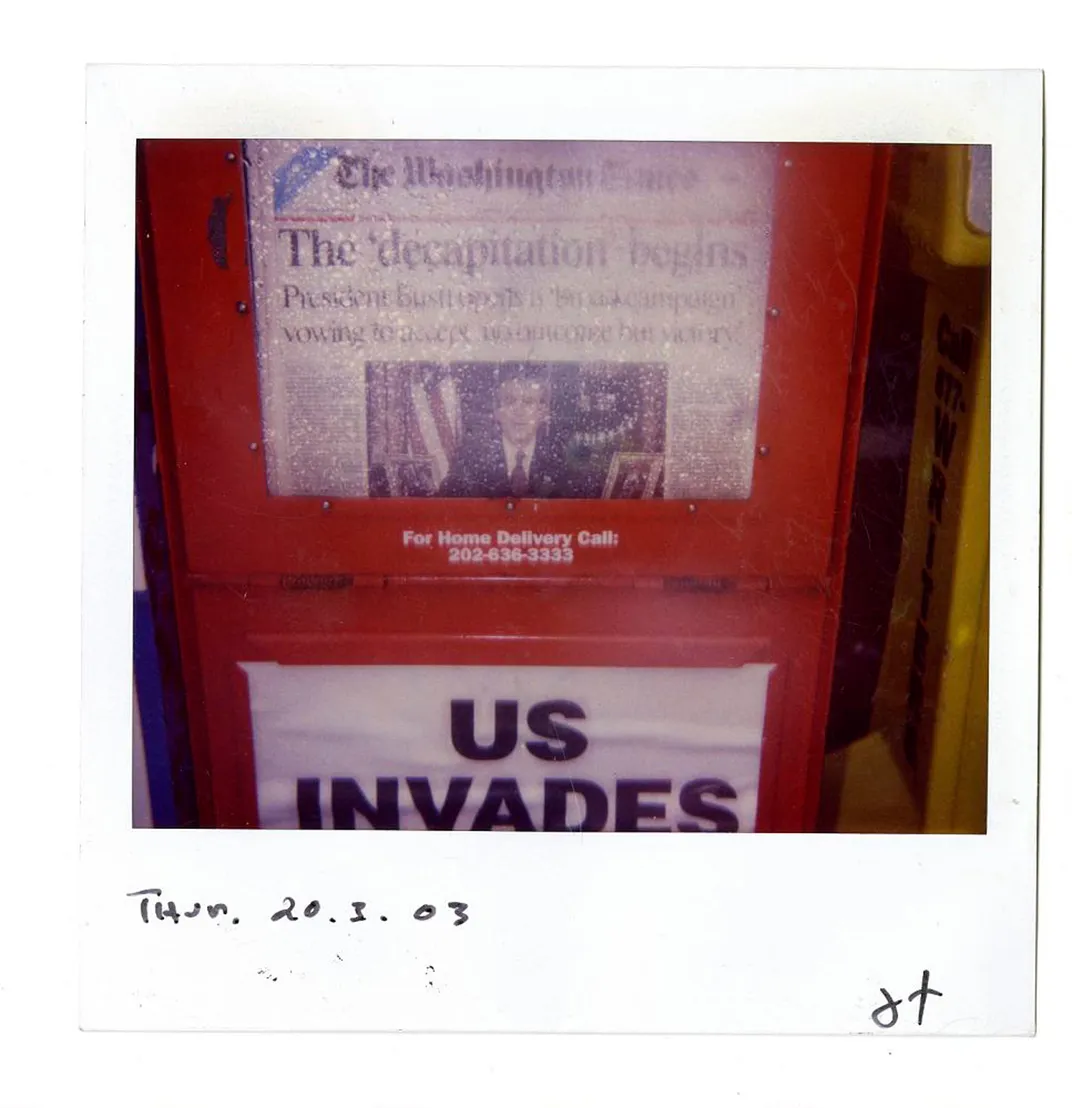
Can you think of the last time, if ever, you purchased a newspaper from a newspaper box? Jo Tartt’s Polaroid photographs picturing newspaper boxes from 2003–2004 in Washington, D.C., record a history of newspaper sales and delivery. The aesthetic of Polaroids, with their soft focus, rapid production, and slightly off colors, suggests what it was like to walk down the street glimpsing headlines and photographs. These bits of text and images in colorful metal and plastic boxes were designed to capture your attention and simultaneously convey a bit of information, hopefully enticing the passerby to put a quarter in the box to buy the paper. Through Tartt’s Polaroids—and the papers’ bold headlines and striking images—we can follow how many Americans encountered news about the unfolding of the war in Iraq on the streets of Washington and New York.
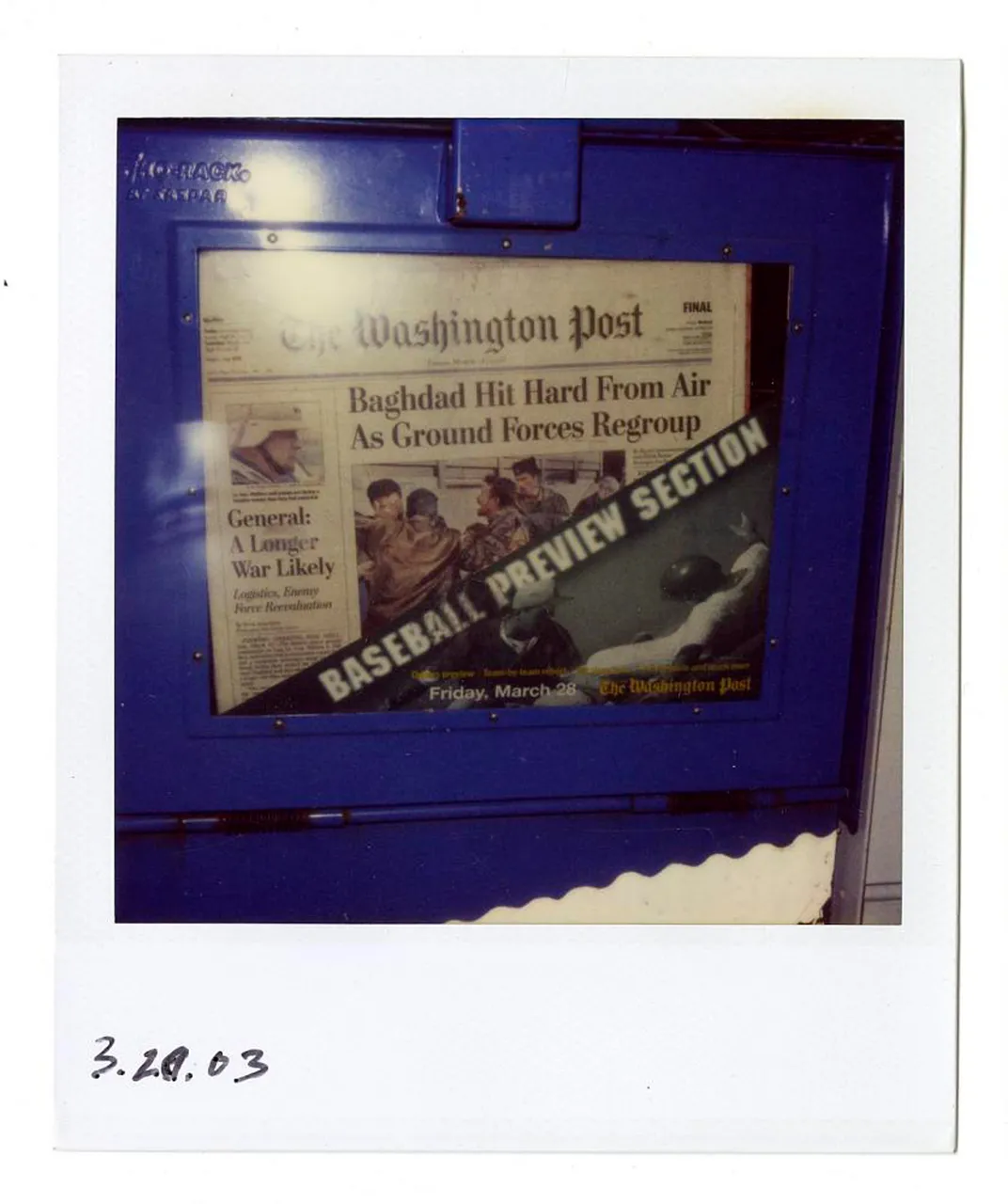
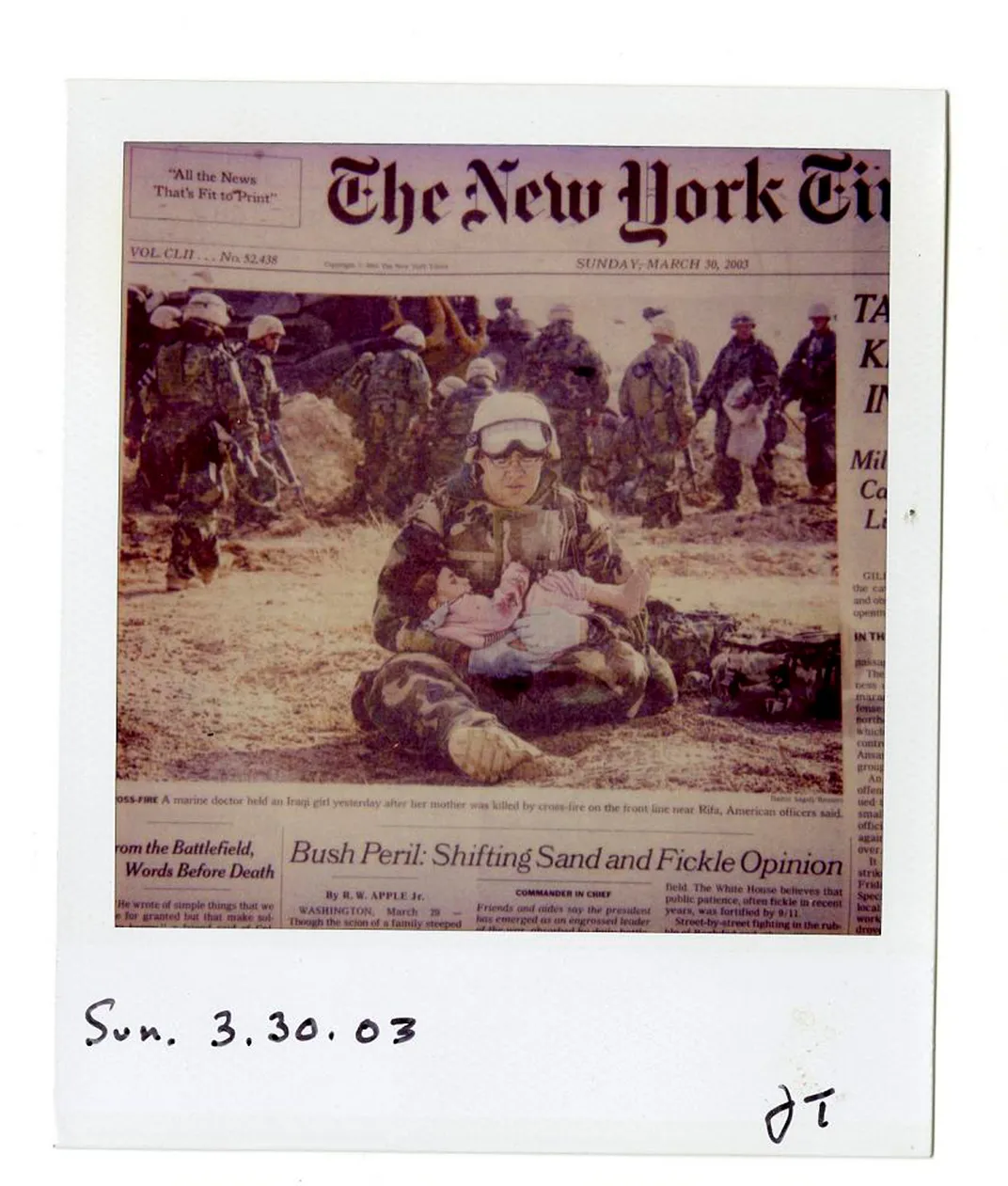
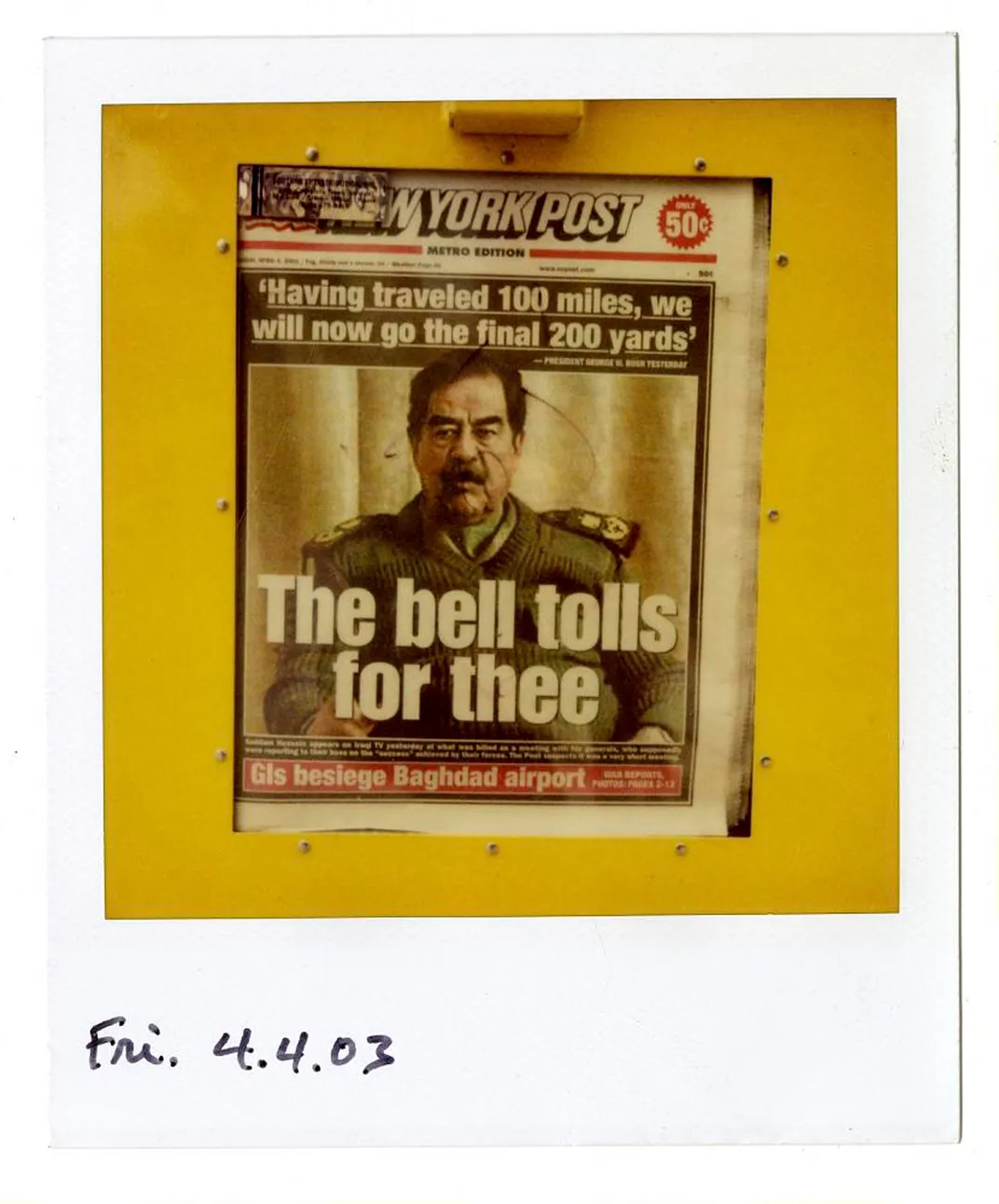
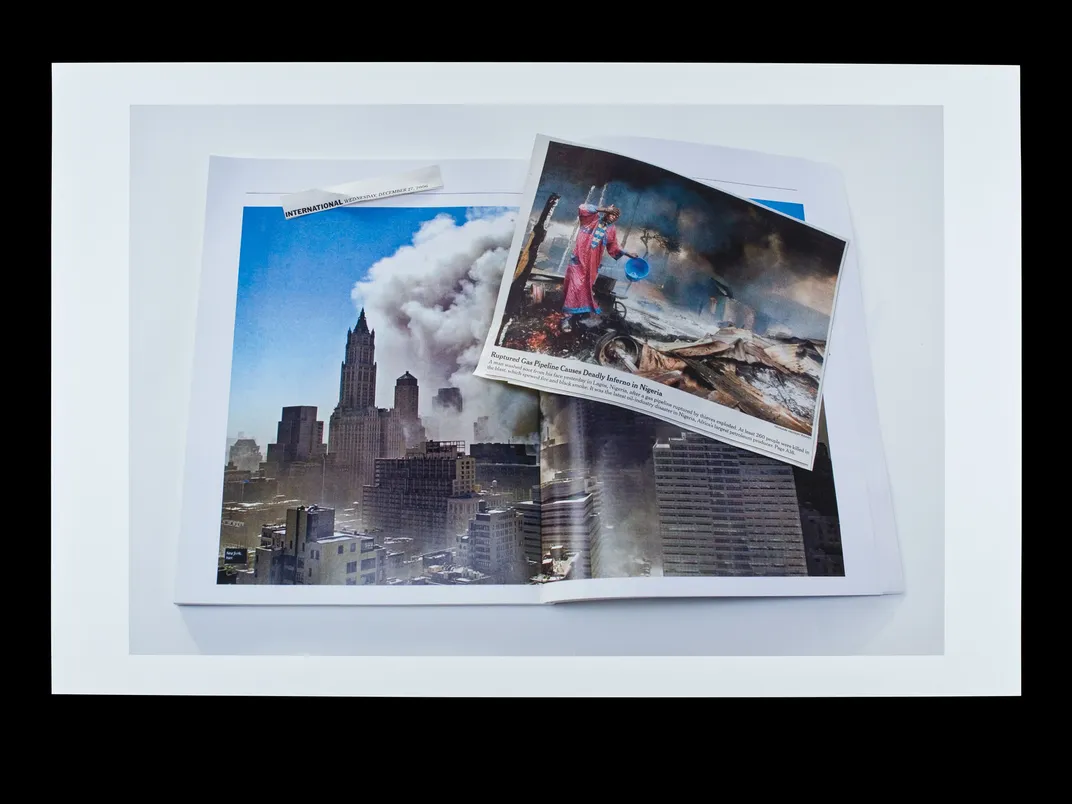
In Deadly Explosions, a New York Times newspaper photograph of an explosion that killed 250 people in Lagos, Nigeria, rests on top of an image of the Twin Towers from September 11, 2001. On that day, many commentators pointed out the contrast between the clear blue sky above New York City and the smoke, ash, and dust. For some, like Leonard and possibly the photographer and photo editors, the bright blue bowl against the disastrous smoky haze and rubble had aesthetic and thematic resonance. If a reader recalls the first images of September 11 while seeing the Lagos photograph, the photographic reference may deepen the interpretation.
The stack of newspapers on my table will be returned to their box shortly and stowed away again. Some of the news of the day was short-lived. Other stories and photos became the grounds for future photography and art, as people continually tried to make sense of the legacy of that day. By considering photography of news media, we can continue to learn about Americans’ experiences and memory of September 11, 2001. As the museum continues to collect different types of photographs documenting September 11, 2001, and its aftermath, we expand our ability to research and to recognize the day’s immediate and lasting impact. At the next big anniversary, will we see something new in them?
Shannon Perich is curator for the Photographic History Collection within the museum's Division of Work and Industry.
This post was originally published on the National Museum of American History's blog on September 9, 2026.