

The Twin Towers in Three Photographs
As the 25th anniversary of September 11, 2001, draws near, these objects from the museum’s Photographic History Collection show how photography has served to document, record, shape and transmit experiences that connect the tragedy and its legacy to American life
/https://tf-cmsv2-smithsonianmag-media.s3.amazonaws.com/filer_public/b9/fc/b9fc21ae-0049-47af-beef-c1c3157523cb/ahb2016q081060_ed.jpg)
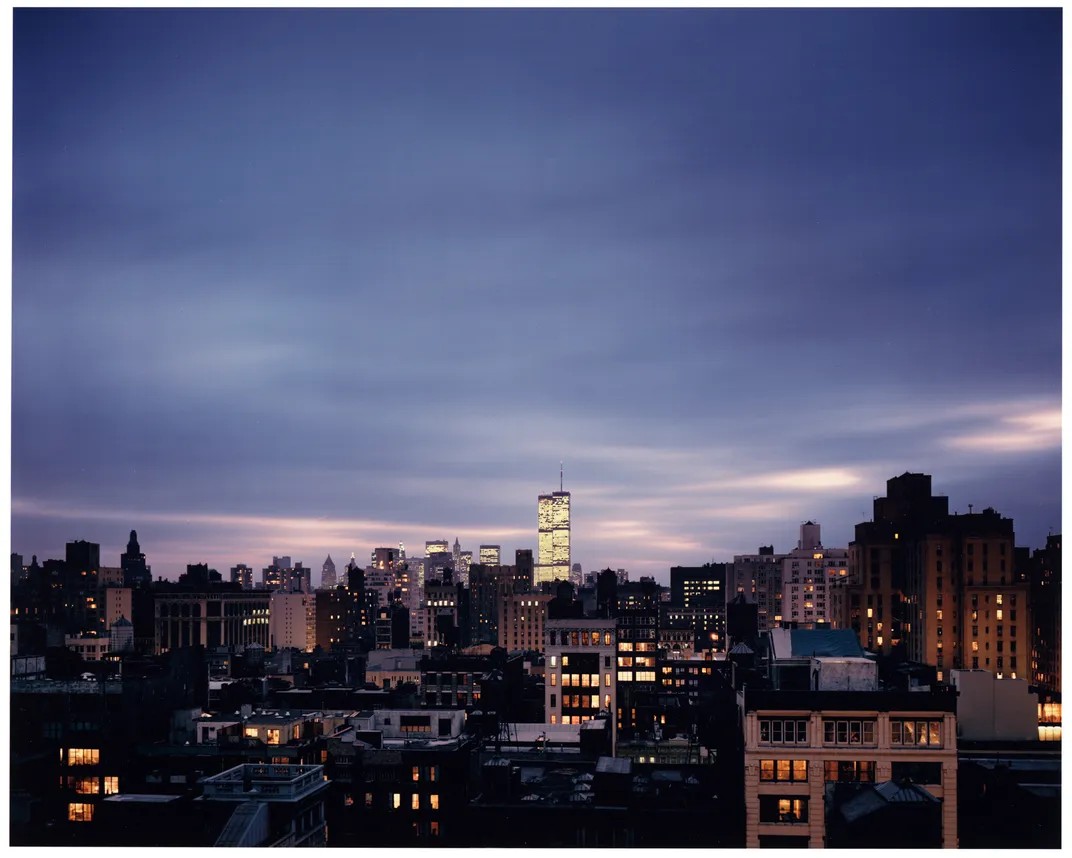
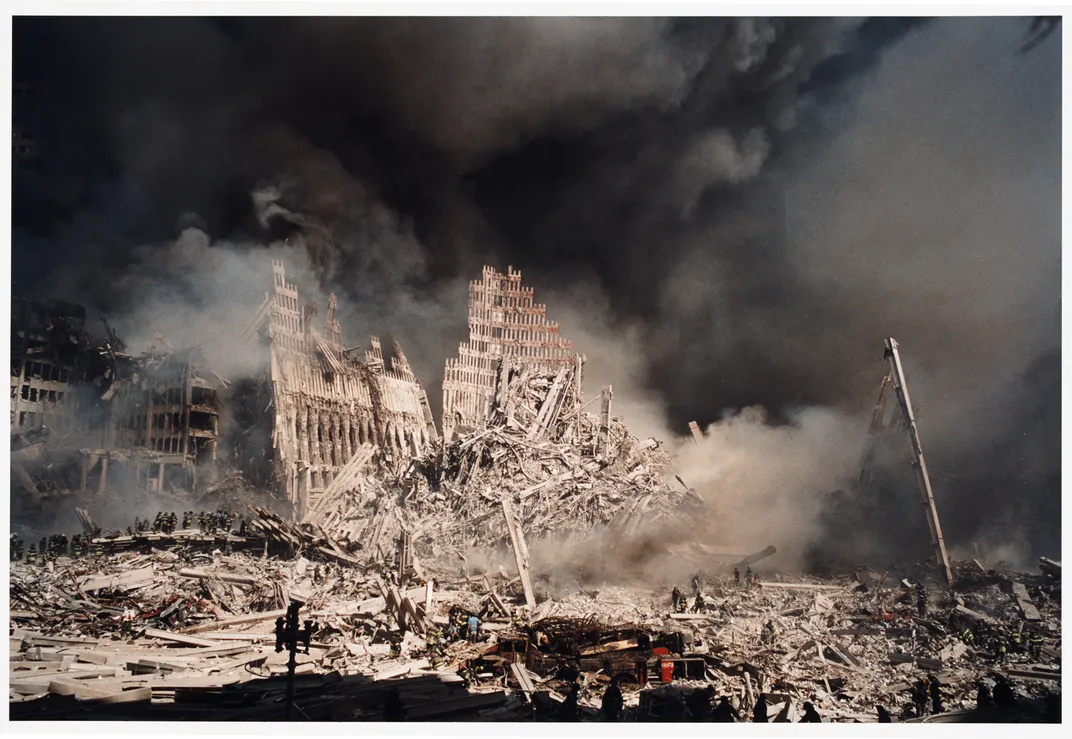
Photographs have the capacity to let us hold big histories in our hands. When we place photographs next to each other, they can lead us to craft storylines that connect one to the other. The sequence of three photographs presented below is linked by their subject, the World Trade Center (WTC). The photos move the viewer through a chronology of the WTC’s Twin Towers and closer into the building, revealing the scale of the destruction on September 11, 2001.
Photographs are tied to the time and place in which they were made. That context remains, even if we look from a geographical or temporal distance. But our response to an image is also colored by what we know or feel about the subject. Joel Meyerowitz’s 1983 image of the towers as glittering symbols of global finance is, simultaneously, haunted by their eventual absence—a reminder of the scale and enormity of a collapse that hasn’t happened yet. Christophe Agou’s September 11 photograph transitions the buildings from prominent symbols to sacred ground. Finally, Robert Rathe’s image delves into a tangible material relic. On the 25th anniversary of September 11, 2001, I’ve selected these photographs as an homage to the Twin Towers’ history.

Virginia-based photographer Robert Rathe carries us forward in time with his photograph, asking us to consider the long afterlife of the materials that built the Twin Towers. While on another assignment in 2002, he encountered 225 pieces of steel from the World Trade Center on the grounds of the National Institute of Standards and Technology (NIST). NIST’s National Construction Safety Team was studying the pieces to improve building and fire safety in hopes of preventing such future collapses. Rathe’s abstract photographs, however, were not made for scientific study. He was taken by the colors and forms the steel beams had become. In this photograph, the steel beam is folded like a piece of cloth. The pastel pinks and yellows over the deeper rusty reds somewhat soften the hardness of the metal. The crumpled material, seen now as an abstraction, offers a close-up view of what was once straight, thick, rigid steel—a stark contrast to Joel Meyerowitz’s bright, sturdy towers.
In Meyerowitz’s photograph, we see the architectural feat of the Twin Towers as magnificent glowing beacons in the distance. The bright lights coming on in the buildings and breaking the darker morning sky suggest it is the life and activity of the many people who worked in them that gave the Twin Towers their value. In Agou’s photograph from the attack site, the remaining structures of the fallen towers appear as a damaged cathedral lit against the darkness of smoke and setting sun. In Rathe’s photograph, a close-up view makes the internal structure of the massive buildings feel human-scaled and tangible. His image helps us to visualize and imagine the devastating amount of energy it took to destroy the buildings and all within. Encountering these images in this order, viewers can garner a sense of what the buildings stood for and find a way to grasp the scale of trauma that otherwise might be too overwhelming.
Shannon Perich is curator for the Photographic History Collection within the museum's Division of Work and Industry.
This post was originally published on the National Museum of American History's blog on September 8, 2026.