
‘Wildwood’ Is the Longest Stop-Motion Animated Film Ever. Each Frame of the Movie Is a Marvel of Handcrafted World Building
Deborah Cook, costumer designer at stop-motion animation studio Laika, discusses creating tiny costumes for puppets in a fantastical world set in the forests of Portland, Oregon
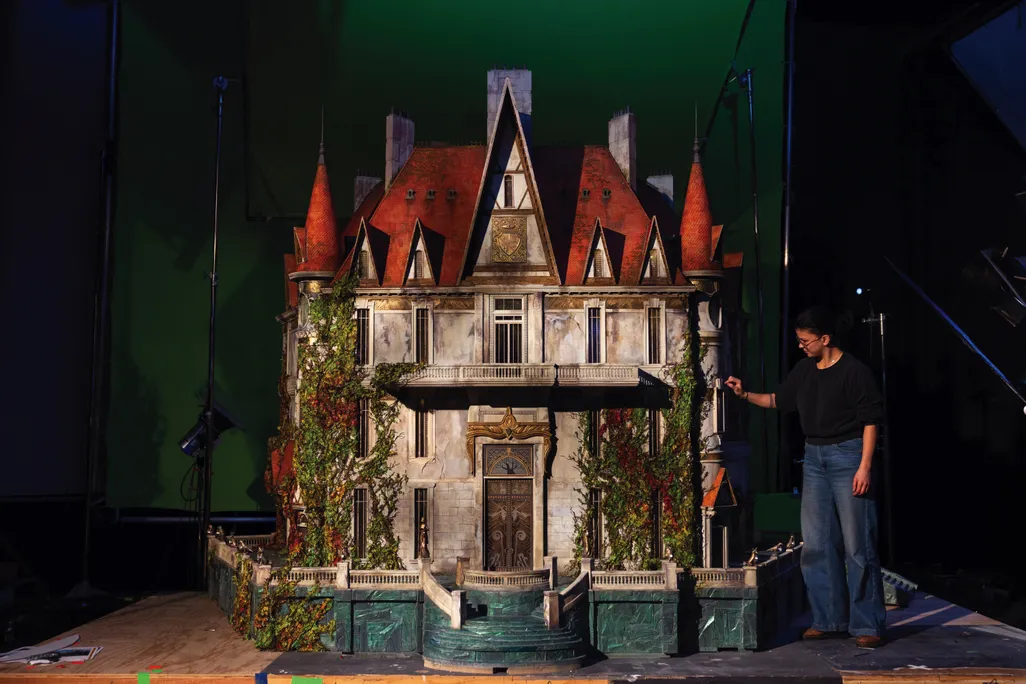
Wildwood, set in a magical world in the unruly forests bordering Portland, Oregon, is the newest film from animation house Laika. Founded in 2005, the studio became acclaimed for its work on films such as Coraline (2009) and Kubo and the Two Strings (2016). Laika champions practical effects and stop-motion animation—a flipbook-like filmmaking style in which objects are moved frame by frame to create the action seen on screen. At 2 hours and 12 minutes, Wildwood is the longest stop-motion animated film ever made.
The story follows the courageous Prue and her classmate Curtis as she embarks on a fantasy adventure in the forests to find her kidnapped baby brother. Costume designer Deborah Cook developed more than 200 pieces for Wildwood.


After her work on Tim Burton’s Corpse Bride, Cook was approached by Laika to work on Coraline. “It was a definite yes,” she says of relocating her life from London to Portland to be part of what would become an Oscar-nominated film. After that production, she stuck with the studio. She was interested in how much Laika’s CEO Travis Knight, who directed Wildwood, was invested in stop-motion. “I really wanted to be part of that,” Cook says.
Fun fact: Book to screen
Wildwood is based on the 2011 middle-grade fantasy novel of the same name, written by Colin Meloy and illustrated by Carson Ellis.
In 2019, Cook got the Wildwood project and then the world shut down because of the Covid-19 pandemic the following year. Stuck in Portland, the city where the film would take place, the costume designer found herself exploring the region with a whole new set of eyes. All the while, Cook notes that she was “approaching this movie with a really fantastical element plus contemporary Portland.”
Ahead of Wildwood’s October 23 release, Cook spoke with Smithsonian magazine about the knits and peacoats that she created to adorn the movie’s characters.
This interview has been edited for length and clarity.
What were your first reactions to hearing the breadth of storytelling for Wildwood and the genres you’d pass through to tell the story in costumes?
It didn’t actually feel too daunting because I feel like it’s a reality that we live in Portland anyway. We work in an animation studio in the actual setting of Wildwood, so we live in that contemporary life in Portland, being aware of what everyone wears. It’s very much an outdoorsy kind of area. But then it’s also full of people with a real high level of imagination and creativity. So it felt like I was partway there to understanding that world already.
It was around 2020, literally the start of lockdown, and this was a fantastic anchor because it almost fit what was happening. I could go out to the end of my road and walk around the Wildwood Trail in Forest Park. That was our “permitted activity” to get outside. I saw so much more in the local nature of my environment than I’d ever really properly absorbed. That was fantastic, and the forest there is magnificent. It really felt quite Jurassic to me. The fact that over Covid, there weren’t as many park keepers meant it became more and more unkempt. Things were growing at a rapid rate and really uncontrollably—you could see that escalation weekly, which was magical in itself.
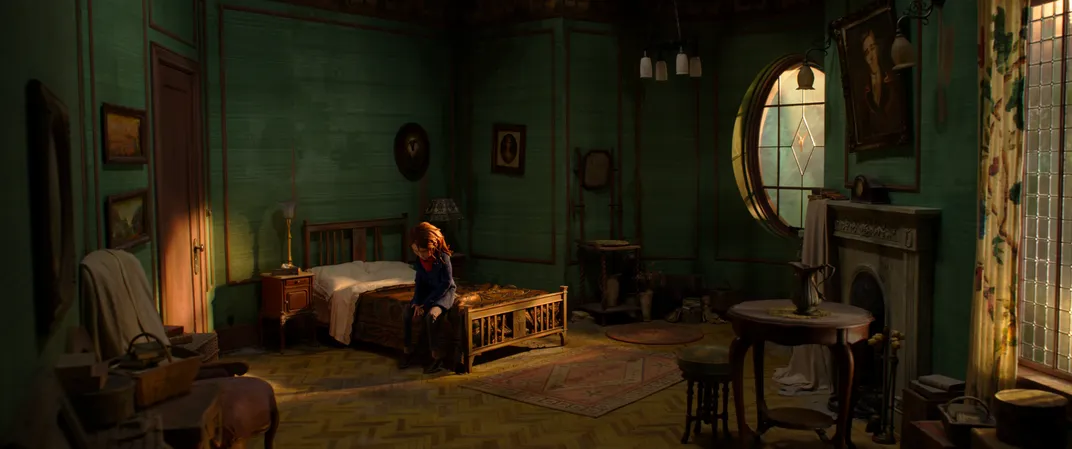
Walking around in the forest at that time, I was very aware of things that I was looking for to discover the vibe of our characters: Like, what would Prue and Curtis feel when they were walking around the forest? What would be normal to them? What would take them out of that world? What is the first thing you would see that would spark a sort of strange curiosity that there’s something mysterious happening that’s out of the ordinary?
How did this inform the characters’ costumes?
Prue is wearing an everyday town coat to start with. She’s very buttoned up and tucked in. She has a few airs and graces, and she thinks she’s a little older and wiser than she is. But when it comes down to the nitty-gritty of having to go out there and rescue her brother, she switches to something that everyone was wearing at that time going into the forest. It’s a little more casual but practical; very, very pragmatic. Everyone has their clothes that would serve them well in a walk around the forest where any weather or climate might come their way. With her trusty boots and hair tied up, she became more of her true self. It revealed her soul a little more, revealing who she really was in a less guarded moment.
Wildwood takes place in a magical world around Portland. How did you begin to approach that world?
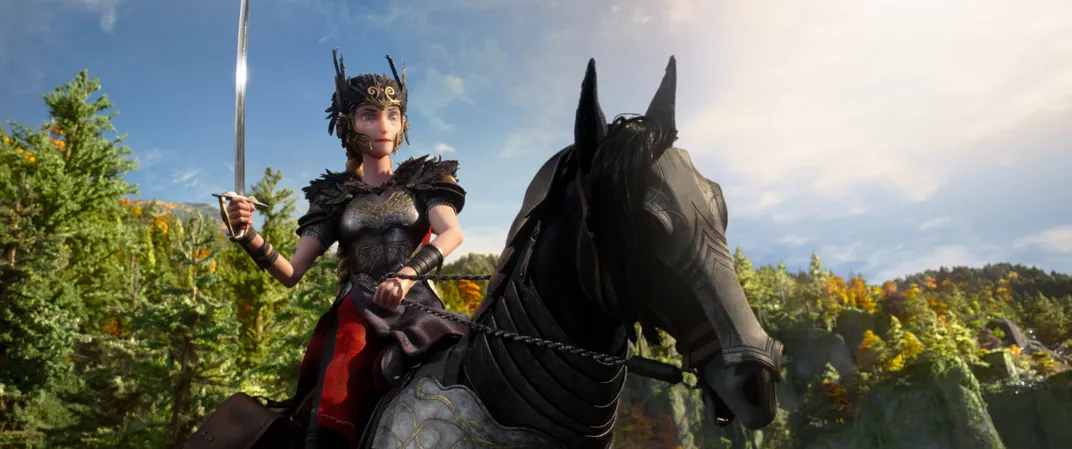
[Prue and Curtis] are going into this forest, and they’re seeing people they don’t recognize. They can’t read them very well. What’s been brought into that world is medieval armor, different ways of making clothing that people might have relied on even if there’d been a parallel civilization that we don’t know about. Where did that clothing come from? Was it left behind by previous civilizations?
There wasn’t anything that got into the impassable wilderness from our world. So it was very much fostering that thought process and understanding what could be in the impassable wilderness but also identifying what each different civilization might be wearing, like what those communities and citizens were wearing that identified them and made them separate from each other.
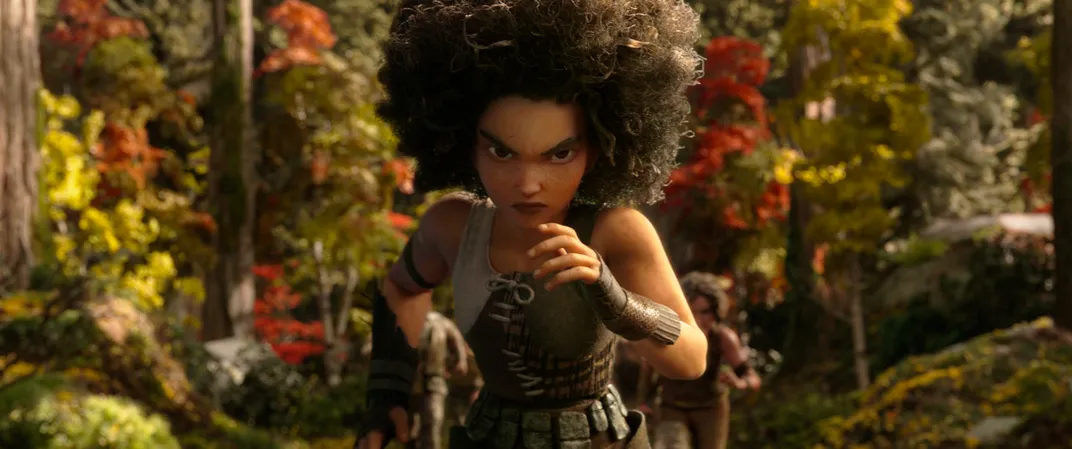
A lot of it was laid out in the book. Carson Ellis’ illustrations are very direct and exemplary in their sophisticated line work. They’re kind of flat on a page, and knowing that Travis wanted to escalate this into something more cinematic and driven three-dimensionally, [we asked ourselves,] how are we going to bring them to life and lift them off the page? What would those characters look like if you saw the back or the side or the top of them? How would their clothing look?
In the film, everything is miniature. For example, there was very tiny chainmail for some of the armor characters wear. Could you speak about the techniques you used to create the costumes?
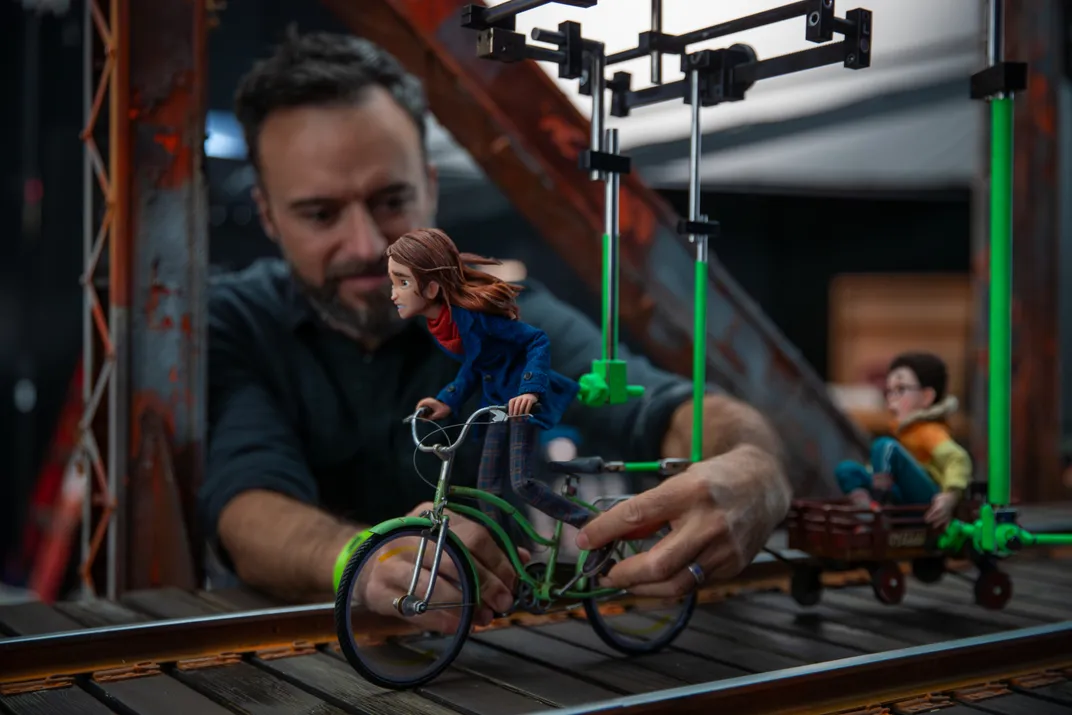
There are different ways that we go about it: Things like Prue’s shoe buckles are handmade, and they are microscopic, but they are all handmade. But then, for other aspects of it, we use rapid prototype printing. We might use polyurethanes that have metallic pigment in them so they look and read like chainmail. Then the camera lights them in a way that makes them look like chainmail, but they are actually flexible. We can also build in backings that are animatable as well, so we can add gravity that they don’t necessarily have because they’re not metal and don’t have that weight.

There’s a lot of knitwear in this film. How did you go about realizing that? Is it very tiny crocheting?
In previous movies, we have had hand knitters, or we’ve hand-crocheted wire, or wire fabric, to it, like chainmail. In The Boxtrolls (2014), there’s a piece of old chainmail that is customized into a garment, and that was hand-crocheted wire; you’re building in the animatable quality within the fabric.
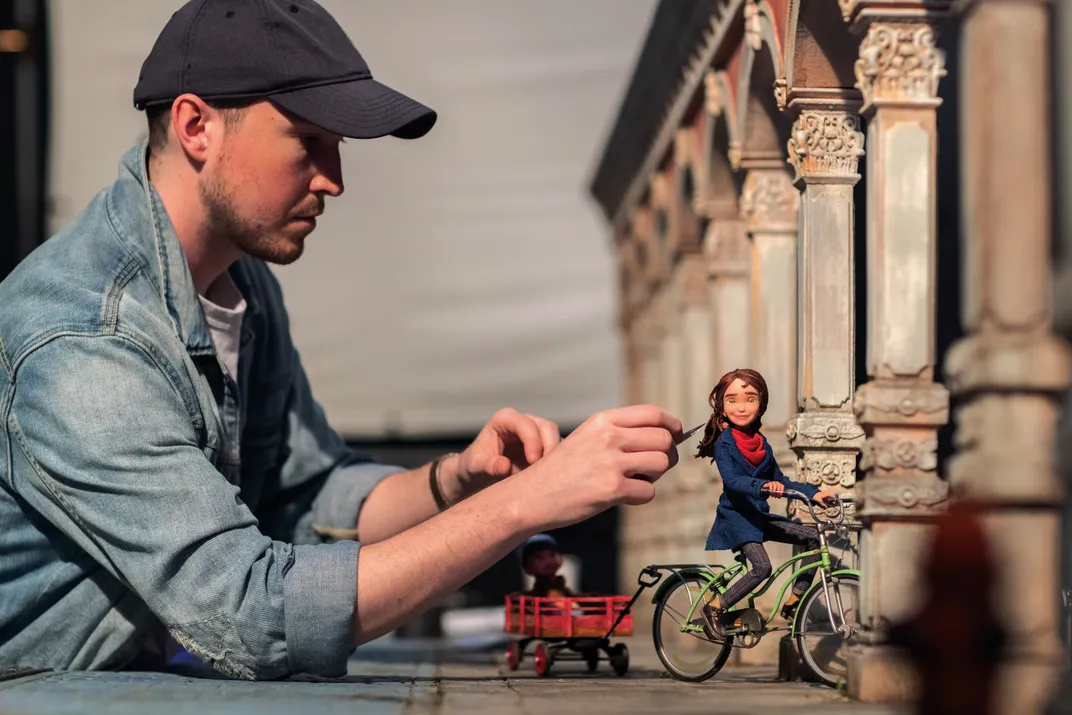
But for this movie—and this is some time later, where we’ve had the opportunity to evolve our techniques more—it was all embroidered, so it is very duplicatable. For Prue’s blue coat, we needed to make 44 of those, plus all the spare parts for replacement. That then needs to be exact to the very millimeter, so we could embroider that to look like a bouclé coat. It’s stitch-perfect. It’s measured, and we program it into a sewing machine. Once we’ve got the shape that we like, it’s embroidered exactly to that pattern shape over and over again. So now we have an almost perfect duplication process, but it reads as knitwear or as a bouclé coat.