• Smithsonian
    Institution
  • Travel
    With Us
  • Smithsonian
    Store
  • Smithsonian
    Channel
  • goSmithsonian
    Visitors Guide
  • Air & Space
    magazine

Smithsonian.com

  • Subscribe
  • History & Archaeology
  • Science
  • Ideas & Innovations
  • Arts & Culture
  • Travel & Food
  • At the Smithsonian
  • Photos
  • Videos
  • Games
  • Shop
  • Life Lists

The Tranquil Zen Garden of Kyoto

With Zen rocks strategically placed in carefully raked white sand, the Ryoan-ji garden evokes peace and beauty

| | | Reddit | Digg | Stumble | Email |
  • By Karen Larkins
  • Smithsonian magazine, January 2008, Subscribe
View More Photos »
Zen Garden of Kyoto
Zen Garden of Kyoto (Ralph Howald, iStockphoto)

Photo Gallery (1/4)

"Nanzen-ji Rock Garden."

Explore more photos from the story

  • See the Zen Garden of Kyoto with Smithsonian »

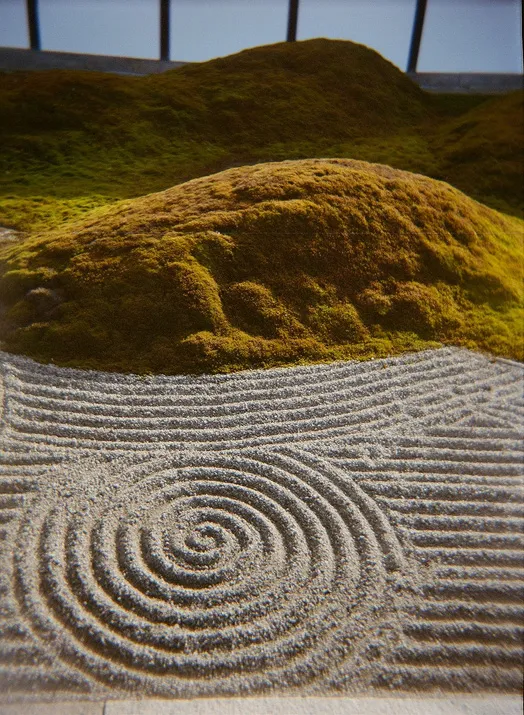
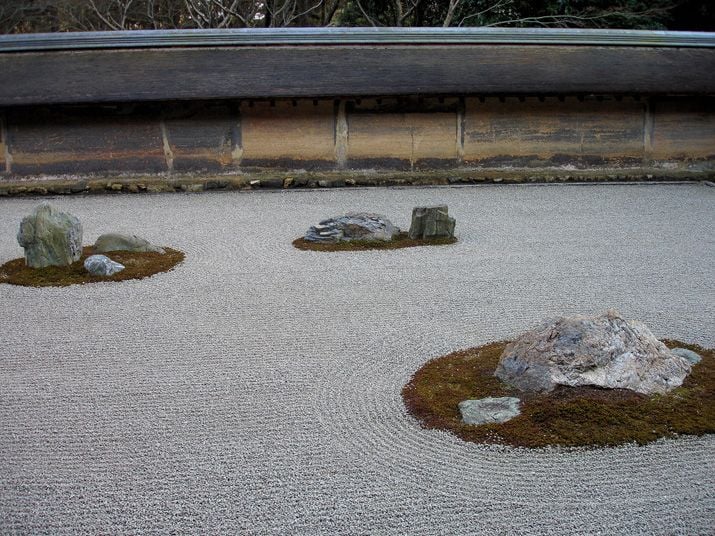
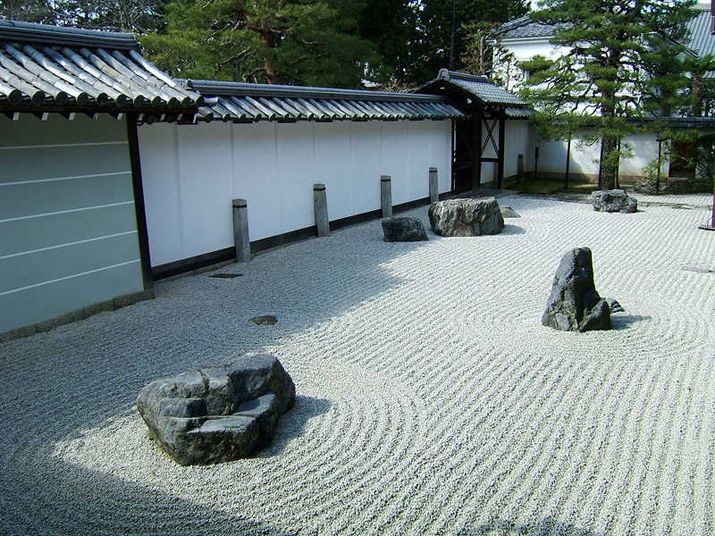
Zen rock gardens, or karesansui (translated as "dry-mountain-water"), originated in medieval Japan and are renowned for their simplicity and serenity. The most famous of these can be found in Kyoto at the 15th-century Ryoan-ji, the Temple of the Peaceful Dragon. "While there are other similar gardens of great beauty," says James Ulak, curator of Japanese art at Smithsonian's Freer and Sackler galleries, "Ryoan-ji remains the ur-site of the type—powerful, abstract, Zen Buddhist landscapes designed to invoke deep meditation."

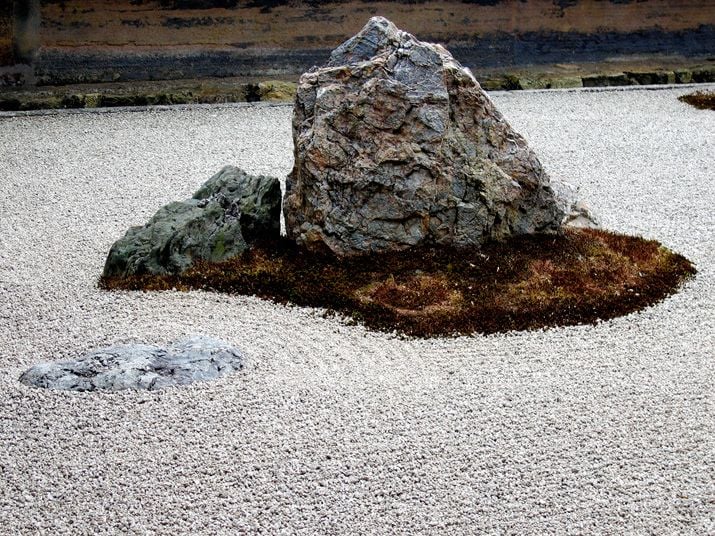
Measuring 98 by 32 feet, the Ryoan-ji garden is about the size of a tennis court and is composed solely of 15 large and small rocks, some encircled by moss, grouped in five clusters on a bed of carefully raked white sand. From a distance, the rocks resemble islands, the sand a tranquil sea.

In 2002, a research team at Kyoto University claimed to have cracked the Zen code. Relying on computer models, they found that the garden's rocks—when viewed from the proper angle—subconsciously evoke the tranquil outline of a branching tree. Over the centuries, however, visitors have discerned images as diverse as a tigress escorting her cubs across water and the Chinese character for "heart" or "mind." Since the anonymous designer left no explanation, the garden's exact meaning remains a mystery, which no doubt contributes to its enduring allure.

What will you see?

Zen rock gardens, or karesansui (translated as "dry-mountain-water"), originated in medieval Japan and are renowned for their simplicity and serenity. The most famous of these can be found in Kyoto at the 15th-century Ryoan-ji, the Temple of the Peaceful Dragon. "While there are other similar gardens of great beauty," says James Ulak, curator of Japanese art at Smithsonian's Freer and Sackler galleries, "Ryoan-ji remains the ur-site of the type—powerful, abstract, Zen Buddhist landscapes designed to invoke deep meditation."

Measuring 98 by 32 feet, the Ryoan-ji garden is about the size of a tennis court and is composed solely of 15 large and small rocks, some encircled by moss, grouped in five clusters on a bed of carefully raked white sand. From a distance, the rocks resemble islands, the sand a tranquil sea.

In 2002, a research team at Kyoto University claimed to have cracked the Zen code. Relying on computer models, they found that the garden's rocks—when viewed from the proper angle—subconsciously evoke the tranquil outline of a branching tree. Over the centuries, however, visitors have discerned images as diverse as a tigress escorting her cubs across water and the Chinese character for "heart" or "mind." Since the anonymous designer left no explanation, the garden's exact meaning remains a mystery, which no doubt contributes to its enduring allure.

What will you see?
    Subscribe now for more of Smithsonian's coverage on history, science and nature.

← Previous
The Grand Canyon in All Its Glory
Smithsonian Life List:
43 Places to
See Before You Die
Next →
The Louvre
The Louvre's Priceless Masterpieces

Related topics: Travel Japan


| | | Reddit | Digg | Stumble | Email |
 

Add New Comment


Name: (required)

Email: (required)

Comment:

Comments are moderated, and will not appear until Smithsonian.com has approved them. Smithsonian reserves the right not to post any comments that are unlawful, threatening, offensive, defamatory, invasive of a person's privacy, inappropriate, confidential or proprietary, political messages, product endorsements, or other content that might otherwise violate any laws or policies.

Comments (5)

i see a man and woman who were forbidden to be together that ran away to love each other one last time before he went back to become ruler of his father's kingdom.

Posted by Avalon Van Slykr on February 11,2012 | 04:30 PM

I see a frog and his eye and foot at the left side of the black rock.

Have a small zen garden and enjoy it.

Posted by Glenda on August 24,2011 | 08:42 PM

i would love to goo too Japan bcuz i love the sight seeing on the river that goes through japan.. i just love it.. when i grow old me and my family are going to move too japan

Posted by kayla on September 30,2010 | 01:55 PM

Ryoan-ji might be the epitome of Japanese Zen gardens, but it is now so overrun with tourists of all kinds that its meaning and its value for meditation is totally lost. Kyoto contains many other Zen gardens where one can be completely within the garden and oneself. Get off the "tourist circuit" and find your own. A suggestion to Ryoan-ji -- limit the numbers, especially of the school groups (Japanese and foreign) to those who are truly interested. Those who just want to check it off of their "life list" should go elsewhere.

Posted by Terry Reagan on October 8,2009 | 08:26 PM

unless there are laws prohibiting a full and complete picture of the garden i see no reason why you did not show the entire garden. 99% percent of us readers will never get a chance to see it.[ poor job ]

Posted by joe kudrich on January 15,2008 | 08:03 PM

I am fortunate to have been there years ago, and it is a truly awe inspiring place. Words and pictures do not begin to adequately describe it. Well worth a trip. But then most of Japan is!

Posted by Beth Wicker on December 29,2007 | 08:45 PM


Advertisement


Kyoto

Most Popular

  • Viewed
  • Emailed
  • Commented
  1. The 20 Best Small Towns in America of 2012
  2. Rare Breed
  3. How Do Death Valley’s “Sailing Stones” Move Themselves Across the Desert?
  4. The 20 Best Small Towns to Visit in 2013
  5. The Scariest Monsters of the Deep Sea
  6. The Gut-Wrenching Science Behind the World’s Hottest Peppers
  7. The True Story of the Battle of Bunker Hill
  8. True Colors
  9. The 20 Best Food Trucks in the United States
  10. The Dark Side of Thomas Jefferson
  1. Women in Science
  2. The Gut-Wrenching Science Behind the World’s Hottest Peppers
  3. Why Fire Makes Us Human
  4. Why Are Finland's Schools Successful?
  5. The World’s Great Structures Built With Legos
  6. Tattoos
  7. Why You Like What You Like
  8. Ten Inventions Inspired by Science Fiction
  9. Michael Pollan and Ruth Reichl Hash out the Food Revolution
  10. The 20 Best Small Towns to Visit in 2013
  1. The True Story of the Battle of Bunker Hill
  2. How Do Death Valley’s “Sailing Stones” Move Themselves Across the Desert?
  3. Microbes: The Trillions of Creatures Governing Your Health

  4. The History of the Lava Lamp
  5. North Carolina - Landmarks and Points of Interest
  6. Lisa Randall’s Guide to the Galaxy
  7. Michael Pollan and Ruth Reichl Hash out the Food Revolution
  8. Top Ten Most-Destructive Computer Viruses
  9. How Did Plants Develop Photosynthesis?
  10. The 20 Best Small Towns to Visit in 2013

View All Most Popular »

Advertisement

Follow Us

Smithsonian Magazine
@SmithsonianMag
Follow Smithsonian Magazine on Twitter

Sign up for regular email updates from Smithsonian.com, including daily newsletters and special offers.

In The Magazine

June 2013

  • The Mind on Fire
  • Burning Desire
  • 10 Epiphanies
  • Rocket Fuel
  • Accounting for Taste

View Table of Contents »


First Name
Last Name
Address 1
Address 2
City
State   Zip
Email


Smithsonian Store

Japanese Sake Set

Hiragana Sake Set, Item No. 71730


View full archiveRecent Issues


  • Jun 2013


  • May 2013


  • Apr 2013

Newsletter

Sign up for regular email updates from Smithsonian magazine, including free newsletters, special offers and current news updates.

Subscribe Now

About Us

Smithsonian.com expands on Smithsonian magazine's in-depth coverage of history, science, nature, the arts, travel, world culture and technology. Join us regularly as we take a dynamic and interactive approach to exploring modern and historic perspectives on the arts, sciences, nature, world culture and travel, including videos, blogs and a reader forum.

Explore our Brands

  • goSmithsonian.com
  • Smithsonian Air & Space Museum
  • Smithsonian Student Travel
  • Smithsonian Catalogue
  • Smithsonian Journeys
  • Smithsonian Channel
  • About Smithsonian
  • Contact Us
  • Advertising
  • Subscribe
  • RSS
  • Topics
  • Member Services
  • Copyright
  • Site Map
  • Privacy Policy
  • Ad Choices

Smithsonian Institution