Guarding Petra
Balancing tourist access and the preservation of the sandstone city may be a tough call
- By Michelle Strange
- Smithsonian magazine, January 2008, Subscribe
"Petra" is the Greek word for "rock." But the Arabic term, al-madina al-ward ah (rose-colored city), far better evokes the beauty of this enigmatic site.
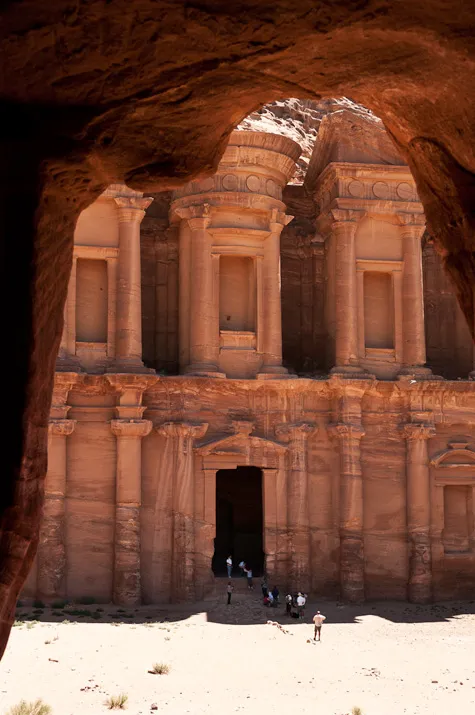
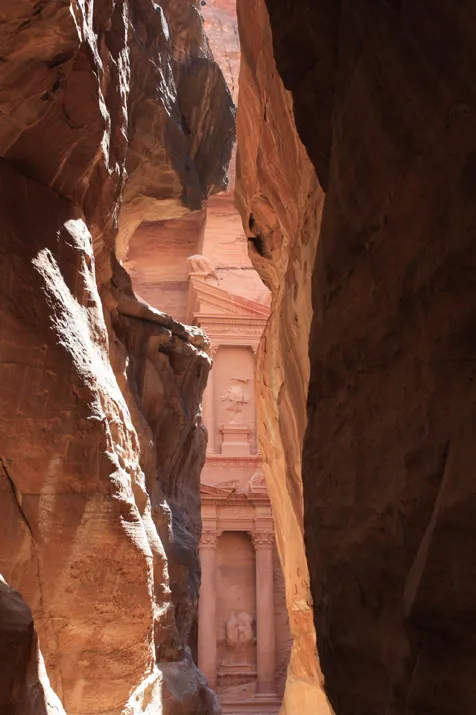
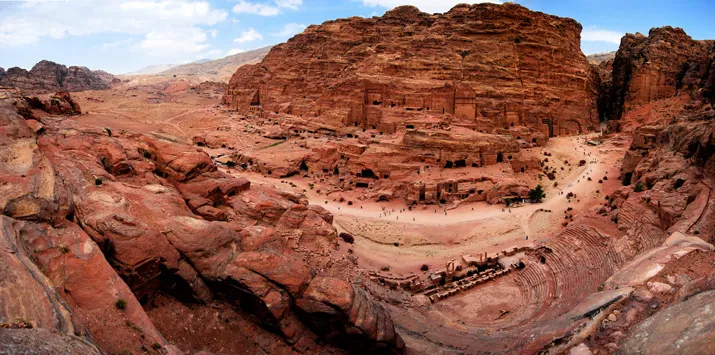
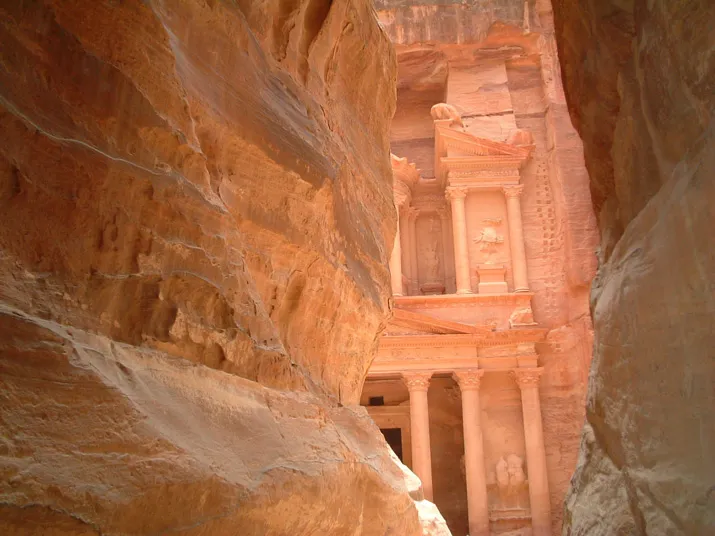
Located in western Jordan, Petra was built in the first century B.C. by an Arab tribe, the Nabateans, who made it the capital of a prosperous mercantile empire. High walls and surrounding mountains served as intimidating defenses against raiders tempted to plunder the city's wealth. The main entrance, the Siq, is a twisting gorge so narrow in some places that only two camels can pass at a time.
Today, as then, visitors approaching through the Siq suddenly behold a stunning metropolis carved from sandstone. One of the first sights is Petra's most recognizable building, Al Khazneh, commonly called "the Treasury" (although it is, in fact, believed to be a large tomb).
The city remained well preserved largely because it was forgotten. Petra fell into decline following earthquakes in the fourth and sixth centuries A.D. It was not even on Western maps until it was rediscovered in 1812 by the Swiss traveler Johann Ludwig Burckhardt.
Nowadays, Petra once again bustles with human activity. Tourists began flocking there in greater numbers after it was featured in the 1989 film Indiana Jones and the Last Crusade. With up to 5,000 visitors a day to the site, some people—among them Jane Taylor, who has photographed Petra for more than 20 years—worry that it could become endangered, possibly prompting restrictions on access. "One of the beauties of Petra," she explains, "has been our freedom to climb wherever we want."
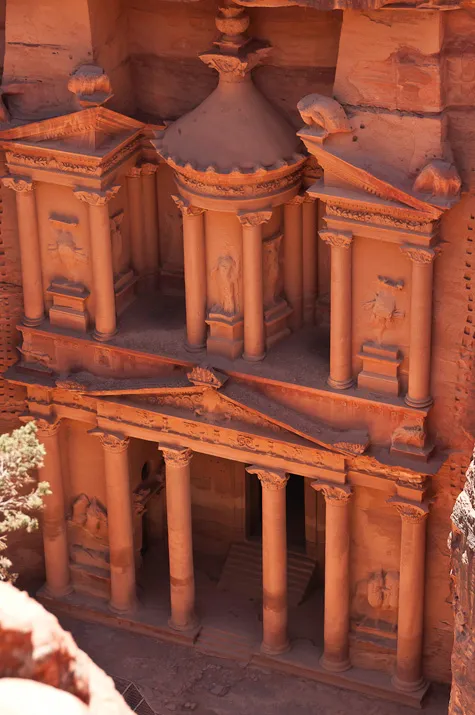
Subscribe now for more of Smithsonian's coverage on history, science and nature.
← Previous![]() Restoring the Taj Mahal |
Smithsonian Life List: 43 Places to See Before You Die |
Next →![]() A Glimpse of Old Pompeii |


Comments (9)
Petra is located in Southern Jordan(not western part. To comment 8:You know nothing about history, Arabs were in the area since long centuries and there are many evidences that Petra was bulit by them. They adapted the Greek, Egyptian and perisan styles in thier local style. Petra has many types of arts, not obly Greek one.
Posted by Adonis on May 26,2012 | 08:39 AM
Please, notice the photo better. Can't you see the Greek rhythm of the walls? It's like an ancient Greek temple. Is it possible that these buildings were built by Arabs who used a Greek rhythm of architecture and gave a Greek name to their city?? Can we stop creating fake history instead reading the real one?? Arabs?? Come on!!! In the ancient world there no Arabs in that area. Only Greeks because of the Alexander the Great and Persians! All the others are small tribes! Not nations!
Posted by Anden on August 14,2011 | 08:47 AM
Just returned from Petra. Only saw 2 carved out bldgs(treasury, etc. Did ride in cart as I have a problem knee. Many tourist, very crowded, People selling jewelry,etc. Children also busy selling as they follow you. Jeep ride into desert and out to walk ledge where many tribesmen had camped in early time. I am sure there must be much more to see. Will look at Jane Taylors photos. Thanks
Posted by jeri on March 21,2011 | 04:56 PM
Petra is an unbelievable treasure---to really explore it and understand the history, you need a guide.Also, don't use the little buggies,the horses are overworked and sore.Ride a camel,and be generous with your tips!
Posted by barbara jaap on August 17,2010 | 08:54 PM
I have been to Petra. Our very enjoyable visit was cut short when a sudden heavy rainfall threatened dangerous flooding as had happened on a previous occassion with several deaths. The authorities closed the site quickly to prevent a repeat. On the way back to Aqaba, it snowed! Our rental car had it's low beams focused very high; it's high beams almost skyward making driving in the snow quite difficult.
Posted by George Patterson on August 10,2010 | 01:04 PM
This site is so beautiful, i cannot afford to travel so i do the traveling by reading about sites like this one. the smithonian magazine is most wonderful about the different places i would like to go, the magazine takes me. I would like to see more pictures of the site petra. It is important to preserve this area so that other generations will also see the wonder of it. Thank you, Iris
Posted by Iris on April 11,2008 | 12:25 PM
I've been to 8 of the 28 and wish that I could have to more. Thank you for the stories and lovely photos.
Posted by Ann Roome on April 1,2008 | 06:23 PM
It was exciting to see Jane Taylor quoted in this article. She is my cousin. I have a copy of her book on Petra. It is one of the most beautiful books that I own. Someday I hope to visit Petra. Until then, I will read her book and go to her website www.janetaylorphotos.com to view many of her photographs.
Posted by Jon S. Ingle on February 22,2008 | 12:51 PM
This site provides good information about history. The information about statue of zeus at olampia was interesting.Its in the 'journey of seven wonders' article of this site.
Posted by Rahul M Joshi on January 17,2008 | 07:42 AM