• Smithsonian
    Institution
  • Travel
    With Us
  • Smithsonian
    Store
  • Smithsonian
    Channel
  • goSmithsonian
    Visitors Guide
  • Air & Space
    magazine

Smithsonian.com

  • Subscribe
  • History & Archaeology
  • Science
  • Ideas & Innovations
  • Arts & Culture
  • Travel & Food
  • At the Smithsonian
  • Photos
  • Videos
  • Games
  • Shop
  • Life Lists

Hiking Mount Kilimanjaro

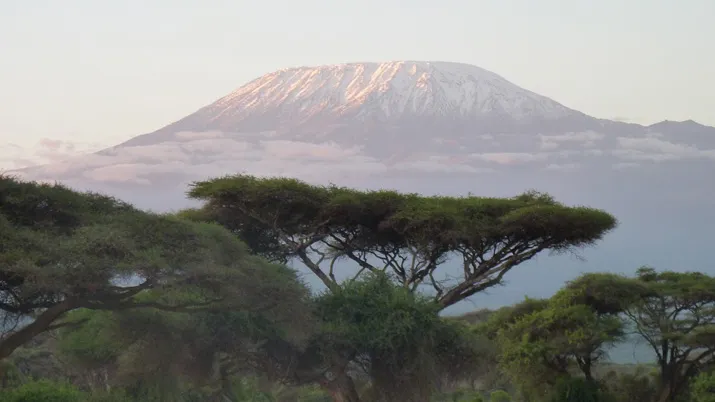
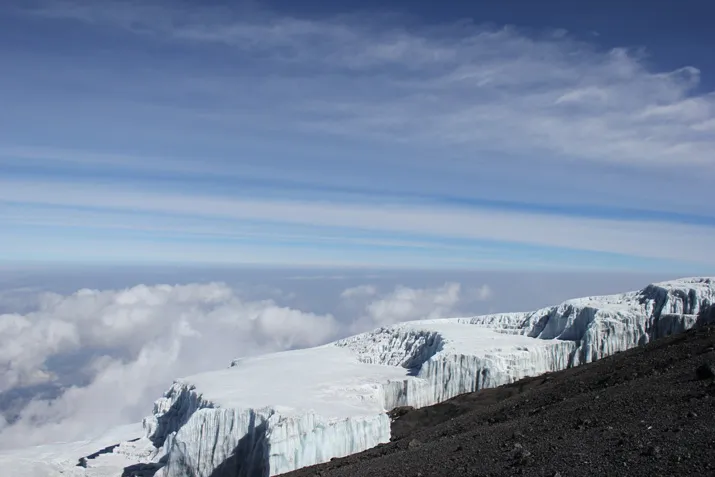
A trek up the world’s tallest freestanding mountain takes you through five different ecosystems and offers a stunning 19,340-foot view

| | | Reddit | Digg | Stumble | Email |
  • By Beth Py-Lieberman
  • Smithsonian magazine, January 2008, Subscribe
View More Photos »
Mount Kilimanjaro
Mount Kilimanjaro (DLILLC/Corbis)

Photo Gallery (1/5)

"The summit of Kilimanjaro"

Explore more photos from the story

  • Discover Mount Kilimanjaro with Smithsonian »

Every year some 15,000 hikers suit up and climb Mount Kilimanjaro, the world's tallest freestanding mountain. They hire porters and pay anywhere from $900 for a basic package to $5,000 for luxury accommodations. Hikers are forbidden to climb the 19,340-foot mountain, which is in Tanzania, East Africa, without a guide.

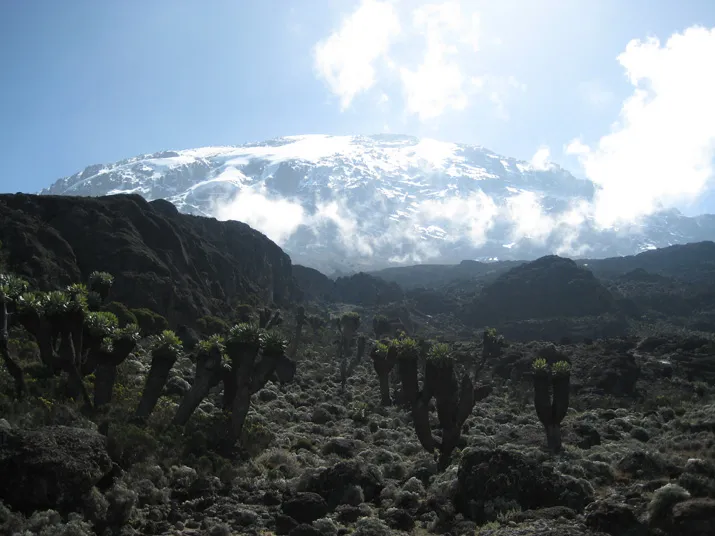
The mountain is deceptive. "When you look at Kilimanjaro from a distance, it just looks manageable," says hiker Dick Munson, whose 2000 attempt to conquer it was halted 1,000 feet from the top when his 12-year-old son, Daniel, developed severe headaches. Only one in ten people complete the five- to six-day trek to the peak. The trick is to walk as slowly as one mile an hour, giving the body time to acclimate to the thin mountain air. The six ascent trails take hikers through five different ecosystems, from rain forest to arctic tundra, and temperatures from 90 degrees to 10 degrees Fahrenheit. After a while, says Munson, "you start thinking, is this really worth it?"

Nicolai Calabria says it is. The 13-year-old raised $57,000 for the Free Wheelchair Mission when he reached the summit last September. Nicolai was born without a right leg, a disability that he says has never hindered him. "I call it my challenge," he says. "I challenged the challenge."
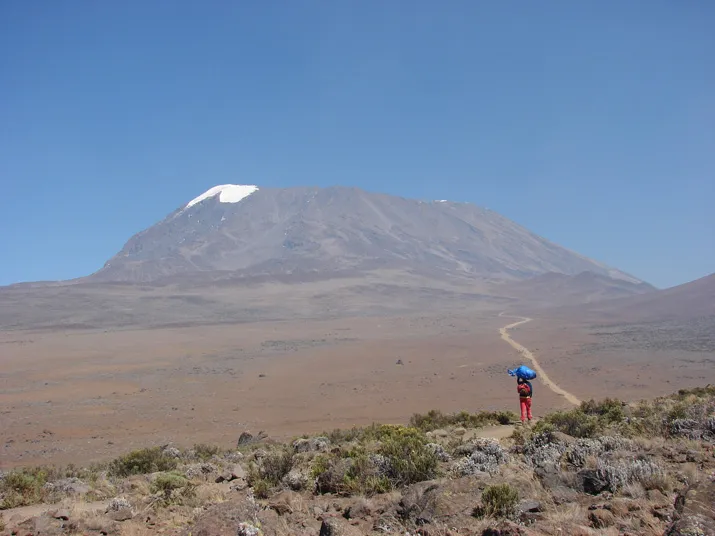
Every year some 15,000 hikers suit up and climb Mount Kilimanjaro, the world's tallest freestanding mountain. They hire porters and pay anywhere from $900 for a basic package to $5,000 for luxury accommodations. Hikers are forbidden to climb the 19,340-foot mountain, which is in Tanzania, East Africa, without a guide.

The mountain is deceptive. "When you look at Kilimanjaro from a distance, it just looks manageable," says hiker Dick Munson, whose 2000 attempt to conquer it was halted 1,000 feet from the top when his 12-year-old son, Daniel, developed severe headaches. Only one in ten people complete the five- to six-day trek to the peak. The trick is to walk as slowly as one mile an hour, giving the body time to acclimate to the thin mountain air. The six ascent trails take hikers through five different ecosystems, from rain forest to arctic tundra, and temperatures from 90 degrees to 10 degrees Fahrenheit. After a while, says Munson, "you start thinking, is this really worth it?"

Nicolai Calabria says it is. The 13-year-old raised $57,000 for the Free Wheelchair Mission when he reached the summit last September. Nicolai was born without a right leg, a disability that he says has never hindered him. "I call it my challenge," he says. "I challenged the challenge."
    Subscribe now for more of Smithsonian's coverage on history, science and nature.

← Previous
The Mystery of Tikal
Smithsonian Life List:
43 Places to
See Before You Die
Next →
The Wild Extremes of Antarctica

Related topics: Travel Tanzania Mountains


| | | Reddit | Digg | Stumble | Email |
 

Add New Comment


Name: (required)

Email: (required)

Comment:

Comments are moderated, and will not appear until Smithsonian.com has approved them. Smithsonian reserves the right not to post any comments that are unlawful, threatening, offensive, defamatory, invasive of a person's privacy, inappropriate, confidential or proprietary, political messages, product endorsements, or other content that might otherwise violate any laws or policies.

Comments (2)

I really admire your determination in going with that high altitude of mountain and its true that the pressure there can cause you some trouble by finishing that summit. And you need to adapt that kind of nature.

Posted by backpacks on December 6,2011 | 09:40 AM

I climbed this mountain with a group of nine as part of a 3week trip to Tanzania, one week safari, one week to climb the Kilimanjaro, and one week Zanzibar. I can say 15 years later it is still the most exciting trip I ever did.

Posted by Erol on May 3,2011 | 05:41 PM


Advertisement


Kilimanjaro

Most Popular

  • Viewed
  • Emailed
  • Commented
  1. The 20 Best Small Towns in America of 2012
  2. How Do Death Valley’s “Sailing Stones” Move Themselves Across the Desert?
  3. 16 Photographs That Capture the Best and Worst of 1970s America
  4. The Gut-Wrenching Science Behind the World’s Hottest Peppers
  5. The 20 Best Small Towns to Visit in 2013
  6. Seven Famous People Who Missed the Titanic
  7. Jack Andraka, the Teen Prodigy of Pancreatic Cancer
  8. The Scariest Monsters of the Deep Sea
  9. For 40 Years, This Russian Family Was Cut Off From All Human Contact, Unaware of WWII
  10. The 20 Best Food Trucks in the United States
  1. Jack Andraka, the Teen Prodigy of Pancreatic Cancer
  2. Lincoln's Whistle-Stop Trip to Washington
  3. How Do Death Valley’s “Sailing Stones” Move Themselves Across the Desert?
  4. The Revolutionary Effect of the Paperback Book
  5. When an Army of Artists Fooled Hitler
  6. The Treasures of Timbuktu
  7. Lee Bontecou's Brave New World
  8. The Amazing Grace of Underwater Portraits
  9. Would You Eat Something Wrapped in a WikiCell?
  10. The 20 Best Small Towns in America of 2012
  1. How Do Death Valley’s “Sailing Stones” Move Themselves Across the Desert?
  2. Touring New York's Most Dynamic Neighborhoods
  3. Gobekli Tepe: The World’s First Temple?
  4. Meet the Real-Life Vampires of New England and Abroad
  5. How the DC-3 Revolutionized Air Travel
  6. For 40 Years, This Russian Family Was Cut Off From All Human Contact, Unaware of WWII
  7. From Close Up or Far Away, Amazing Volcano Photos
  8. The Scariest Monsters of the Deep Sea
  9. Why the Endangered Species Act Is Broken, and How to Fix It
  10. The 20 Best Food Trucks in the United States

View All Most Popular »

Advertisement

Follow Us

Smithsonian Magazine
@SmithsonianMag
Follow Smithsonian Magazine on Twitter

Sign up for regular email updates from Smithsonian.com, including daily newsletters and special offers.

In The Magazine

June 2013

  • The Mind on Fire
  • Burning Desire
  • 10 Epiphanies
  • Rocket Fuel
  • Accounting for Taste

View Table of Contents »


First Name
Last Name
Address 1
Address 2
City
State   Zip
Email


Smithsonian Store

Giraffe Herd

Item No. 80148


View full archiveRecent Issues


  • Jun 2013


  • May 2013


  • Apr 2013

Newsletter

Sign up for regular email updates from Smithsonian magazine, including free newsletters, special offers and current news updates.

Subscribe Now

About Us

Smithsonian.com expands on Smithsonian magazine's in-depth coverage of history, science, nature, the arts, travel, world culture and technology. Join us regularly as we take a dynamic and interactive approach to exploring modern and historic perspectives on the arts, sciences, nature, world culture and travel, including videos, blogs and a reader forum.

Explore our Brands

  • goSmithsonian.com
  • Smithsonian Air & Space Museum
  • Smithsonian Student Travel
  • Smithsonian Catalogue
  • Smithsonian Journeys
  • Smithsonian Channel
  • About Smithsonian
  • Contact Us
  • Advertising
  • Subscribe
  • RSS
  • Topics
  • Member Services
  • Copyright
  • Site Map
  • Privacy Policy
  • Ad Choices

Smithsonian Institution