• Smithsonian
    Institution
  • Travel
    With Us
  • Smithsonian
    Store
  • Smithsonian
    Channel
  • goSmithsonian
    Visitors Guide
  • Air & Space
    magazine

Smithsonian.com

  • Subscribe
  • History & Archaeology
  • Science
  • Ideas & Innovations
  • Arts & Culture
  • Travel & Food
  • At the Smithsonian
  • Photos
  • Videos
  • Games
  • Shop
  • Life Lists

A Glimpse of Old Pompeii

Preserved under the volcanic ash from Mount Vesuvius are the everyday goings-on of ancient Roman life

| | | Reddit | Digg | Stumble | Email |
  • By Mark Strauss
  • Smithsonian magazine, January 2008, Subscribe
View More Photos »
Pompeii
Pompeii (iStockphoto)

Photo Gallery (1/4)

"Mt. Vesuvius & the ruins of Pompeii."

Explore more photos from the story

  • Explore Pompeii with Smithsonian »

Pompeii's history reads like a Greek tragedy. Settlers originally flocked to the site of the Roman port city because of its fertile soil—the product of volcanic ash from nearby Mount Vesuvius. Yet that very same volcano would erupt and doom the city of 10,000 to 20,000 inhabitants in A.D. 79.

Many Europeans toured the city's ancient ruins in the decades following their initial excavations in 1748. Indeed, Pompeii became all the rage across the continent, inspiring a gaudy revival in Classical art and architecture.

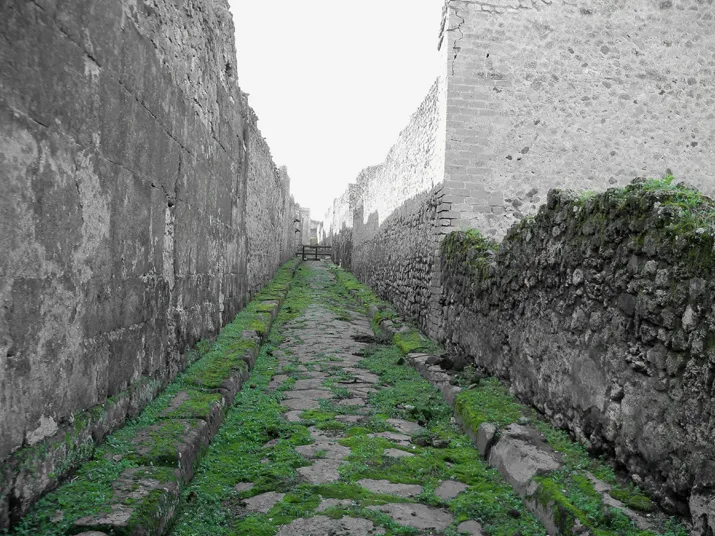
But for archaeologists and present-day visitors, the real thrill of Pompeii is that the most mundane aspects of ancient Roman life have been preserved for centuries beneath fine-grained volcanic ash. Graffiti still covers walls; some of the excavated bakeries had bread loaves in their ovens. (The National Archaeological Museum in nearby Naples displays many of the most important finds.) Visitors to the city can tour homes such as the House of the Vettii—a residence of wealthy merchants, with walls adorned with frescoes depicting scenes from classical mythology.

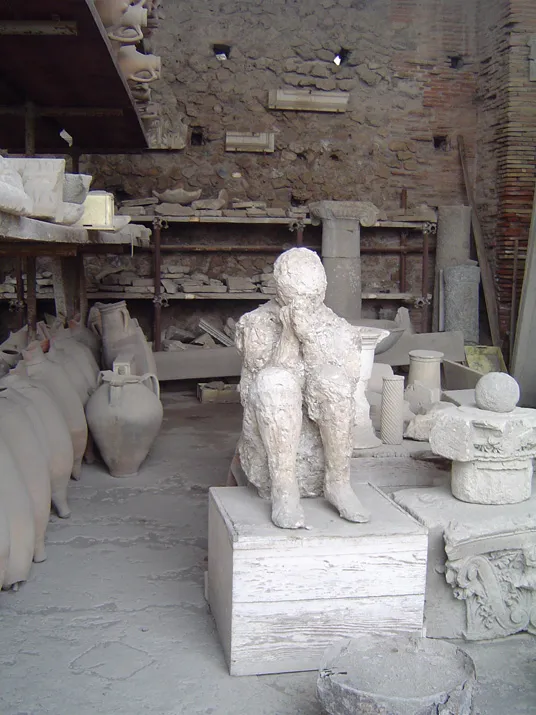
Among the most moving sights is the Garden of the Fugitives, which displays plaster casts of some of the victims in their final moments of life. "It adds an extra dimension to Pompeii," observes Rick Jones, an archaeologist at the University of Bradford in England, who has conducted research at the site since 1994. "It creates a sense of intimacy, a connection to the people who lived there."
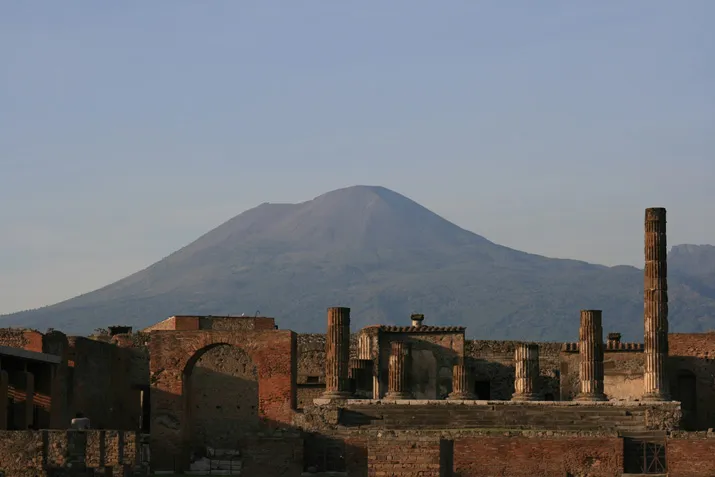
Pompeii's history reads like a Greek tragedy. Settlers originally flocked to the site of the Roman port city because of its fertile soil—the product of volcanic ash from nearby Mount Vesuvius. Yet that very same volcano would erupt and doom the city of 10,000 to 20,000 inhabitants in A.D. 79.

Many Europeans toured the city's ancient ruins in the decades following their initial excavations in 1748. Indeed, Pompeii became all the rage across the continent, inspiring a gaudy revival in Classical art and architecture.

But for archaeologists and present-day visitors, the real thrill of Pompeii is that the most mundane aspects of ancient Roman life have been preserved for centuries beneath fine-grained volcanic ash. Graffiti still covers walls; some of the excavated bakeries had bread loaves in their ovens. (The National Archaeological Museum in nearby Naples displays many of the most important finds.) Visitors to the city can tour homes such as the House of the Vettii—a residence of wealthy merchants, with walls adorned with frescoes depicting scenes from classical mythology.

Among the most moving sights is the Garden of the Fugitives, which displays plaster casts of some of the victims in their final moments of life. "It adds an extra dimension to Pompeii," observes Rick Jones, an archaeologist at the University of Bradford in England, who has conducted research at the site since 1994. "It creates a sense of intimacy, a connection to the people who lived there."
    Subscribe now for more of Smithsonian's coverage on history, science and nature.

← Previous
Guarding Petra
Guarding Petra
Smithsonian Life List:
43 Places to
See Before You Die
Next →
In the Cliffs of Mesa Verde

Related topics: Travel Rome


| | | Reddit | Digg | Stumble | Email |
 

Add New Comment


Name: (required)

Email: (required)

Comment:

Comments are moderated, and will not appear until Smithsonian.com has approved them. Smithsonian reserves the right not to post any comments that are unlawful, threatening, offensive, defamatory, invasive of a person's privacy, inappropriate, confidential or proprietary, political messages, product endorsements, or other content that might otherwise violate any laws or policies.

Comments (16)

+ View All Comments

Does anyone know what a doctor would b called in ancient Pompeii?

Posted by Daniel on March 27,2013 | 07:22 PM

October 2011
From our ship, we opted to take the city bus to Herculaneum rather than Pompeii. We had a great day touring the ruins and my companion rented an audio tour. Many guides were available at the site and it contained the "caves" someone asked about which were actually at the ancient waterfront. (now above sea level)But not really cave but shelters for boats and such.
I wanted to go to the archeological museum in Naples but no time. Our ship was only there one day. There is alot to do in that port(Naples) and its regrettable that the "afforable" ships do not give it more time.
However I had read several books beforehand and gone to the Pompeii exhibit in NYC which was extensive, including plaster casts, jewelery, pots, and an amazing film.

My only complaint was the senior discount only applied to Europeans, and the woman sarcastically asked for my passport when I questioned the policy. Also the bathrooms at the entrance were out of order.

Posted by Lucille Bogdanowicz on December 12,2011 | 11:35 AM

In reference to the caves that people hid in, I believe that they went to boat houses down at the waters edge to try to escape the eruption of Mt. Vesuvius.

Posted by Kathy Farmer on December 27,2010 | 10:49 PM

Visited Pompei on my first trip to Europe about 15 yers ago. Being a history major in college, I'd heard of Pompeii but assumed that it was a small dig in the middle of nowhere. Was pleasantly surprised to find that it had been a major city. Meandered through the site with a friend for at least half a day. Most memorable were the 'Brothel', 'Beware of Dog' mosaic, chariot ruts in the stone streets, and the residents permanently captured by the volcanic ash. A must see for all. Take plenty of water and wander about without the tour.

Posted by Ken on July 16,2010 | 06:39 PM

To be precise, I visited Pompeii on the 3rd Apr 2010.
Simply awesome. It is a place visited by people across the globe. It was a part of the trip that I had planned for visiting Italy in this easter holidays (from Germany, where I am staying at present, though I am from India).
Alongwith with holiday makers like me & my accompanion, we also saw students visiting the place.

Posted by Kalyan Sarkar on April 5,2010 | 04:26 PM

I know right isnt Pompeii Intresting! i need to go to Pompeii and see what it was like!

Posted by lisa bridgwell on March 21,2010 | 10:09 PM

Pompeii is so interesting!

Posted by Noah on February 19,2010 | 09:25 AM

I visited Pompeii in November 2009, I enjoyed every moment of the tour, history in real life. I also visited Mt Versuvius, nothing was disappointing to me.

Posted by verna on February 1,2010 | 06:31 PM

why isnt therr any information about daily life in pompeii?

Posted by on December 15,2009 | 06:17 PM

My family and I recently went to Pompeii as part of a cruise around Europe. We did not go on a tour but walked around the city on our own. Not doing the tour was a good idea because we were able to see what we wanted to see and we covered much more ground than any of the tours. If you do plan to go to Pompeii I suggest watching the movie "Pompeii: The Last Day" before and after your trip. It explains the history of Pompeii extremely well. Pompeii was one of my favorite stops, I recommend it to anyone traveling in Italy.

Posted by Marie on November 26,2009 | 04:36 PM

i agree with joann tilton

Posted by billy bob on November 10,2008 | 10:28 AM

I cannot seem to find any references to the caves where many of the people went, only to be trapped in them. Any leads ? For a while it was assumed that of the 25,000 people ?, only 1000 were found, and then many more in these caves. Thanks Doug

Posted by doug seiler on August 9,2008 | 12:01 PM

I visited Pompeii with my family June 2008. We went on a 3 hour tour of Pompeii that ended to be about 1:45 minutes in Pompeii. My lesson is book a smaller tour, 40 people is too many to move anywhere fast down the narrow streets. We went to the Naples Archaeological Museum in Naples first on our own which has a model of Pompeii along with artifacts that we enjoyed seeing up close. Well worth the stop in Naples.

Posted by Gail Wells on July 2,2008 | 04:38 PM

Walking in actual chariot ruts and seeing the places where the people of Pompei lived and to see and touch things made so long ago brought the past alive for me. What surprised me most was the plaster casts of the people. They were so small, so very small-- yet so animate, so real. You could imagine what life was like so long ago. ---- This is the real thing.

Posted by Joann Tilton on March 11,2008 | 08:37 PM

+ View All Comments


Advertisement


Pompeii

Most Popular

  • Viewed
  • Emailed
  • Commented
  1. The 20 Best Small Towns in America of 2012
  2. The 20 Best Small Towns to Visit in 2013
  3. When an Army of Artists Fooled Hitler
  4. For 40 Years, This Russian Family Was Cut Off From All Human Contact, Unaware of WWII
  5. Never Underestimate the Power of a Paint Tube
  6. The Scariest Monsters of the Deep Sea
  7. 16 Photographs That Capture the Best and Worst of 1970s America
  8. Seven Famous People Who Missed the Titanic
  9. The True Story of the Battle of Bunker Hill
  10. We Had No Idea What Alexander Graham Bell Sounded Like. Until Now
  1. The True Story of the Battle of Bunker Hill
  2. Never Underestimate the Power of a Paint Tube
  3. Teller Reveals His Secrets
  4. Lincoln, Nebraska: Home on the Prairie
  5. America's True History of Religious Tolerance
  6. The Great(est) Gatsby Playlist
  7. The Future is Here
  8. The Worst Parade to Ever Hit the Streets of Boston
  9. What is Causing Iran’s Spike in MS Cases?

  1. Buzz Aldrin on Why We Should Go to Mars
  2. Where Did the Taco Come From?
  3. You got a problem with that?
  4. America's True History of Religious Tolerance
  5. Curse of the Devil's Dogs
  6. How Can a Jellyfish This Slow Be So Deadly? It's Invisible
  7. Kentucky - Landmarks and Points of Interest
  8. Rethinking Neanderthals
  9. For 40 Years, This Russian Family Was Cut Off From All Human Contact, Unaware of WWII
  10. We Had No Idea What Alexander Graham Bell Sounded Like. Until Now
  1. The Jetsons at 50

View All Most Popular »

Advertisement

Follow Us

Smithsonian Magazine
@SmithsonianMag
Follow Smithsonian Magazine on Twitter

Sign up for regular email updates from Smithsonian.com, including daily newsletters and special offers.

In The Magazine

May 2013

  • Patriot Games
  • The Next Revolution
  • Blowing Up The Art World
  • The Body Eclectic
  • Microbe Hunters

View Table of Contents »


First Name
Last Name
Address 1
Address 2
City
State   Zip
Email


Smithsonian Store

Jazz: The Smithsonian Anthology

Item No. 10447


View full archiveRecent Issues


  • May 2013


  • Apr 2013


  • Mar 2013

Newsletter

Sign up for regular email updates from Smithsonian magazine, including free newsletters, special offers and current news updates.

Subscribe Now

About Us

Smithsonian.com expands on Smithsonian magazine's in-depth coverage of history, science, nature, the arts, travel, world culture and technology. Join us regularly as we take a dynamic and interactive approach to exploring modern and historic perspectives on the arts, sciences, nature, world culture and travel, including videos, blogs and a reader forum.

Explore our Brands

  • goSmithsonian.com
  • Smithsonian Air & Space Museum
  • Smithsonian Student Travel
  • Smithsonian Catalogue
  • Smithsonian Journeys
  • Smithsonian Channel
  • About Smithsonian
  • Contact Us
  • Advertising
  • Subscribe
  • RSS
  • Topics
  • Member Services
  • Copyright
  • Site Map
  • Privacy Policy
  • Ad Choices

Smithsonian Institution