
Brain Pickings’ Top 11 History Books of the Year
The editor behind the site that curates the best content on the web lists the most interesting history books of 2011
/https://tf-cmsv2-smithsonianmag-media.s3.amazonaws.com/filer/brain-pickings-best-history-books-2011-border-631.jpg)
After the year’s best children’s books, art and design books, photography books, and science books, the 2011 best-of series continues with a look at the most fascinating history books featured on Brain Pickings this years, tomes that unearth unknown treasures from the annals of yesteryear or offer an unusual lens on a familiar piece of our cultural past.
1. THE INFORMATION
The future of information can’t be complete without a full understanding of its past. That, in the context of so much more, is exactly what iconic science writer James Gleick explores in The Information: A History, a Theory, a Flood — the book you’d have to read if you only read one book this year. Flowing from tonal languages to early communication technology to self-replicating memes, Gleick delivers an astonishing 360-degree view of the vast and opportune playground for us modern “creatures of the information,” to borrow vocabulary from Jorge Luis Borges’ much more dystopian take on information in the 1941 classic, “The Library of Babel,” which casts a library’s endless labyrinth of books and shelves as a metaphor for the universe.
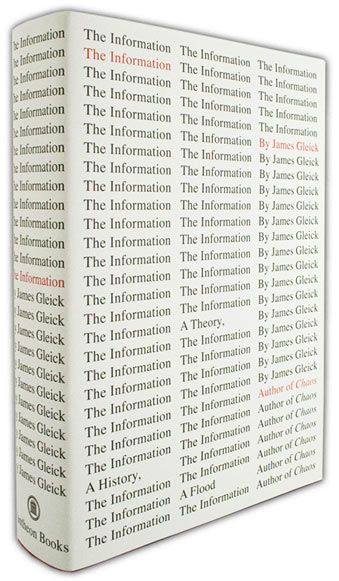
Gleick illustrates the central dogma of information theory through a riveting journey across African drum languages, the story of the Morse code, the history of the French optical telegraph, and a number of other fascinating facets of humanity’s infinite quest to transmit what matters with ever-greater efficiency.
We know about streaming information, parsing it, sorting it, matching it, and filtering it. Our furniture includes iPods and plasma screens, our skills include texting and Googling, we are endowed, we are expert, so we see information in the foreground. But it has always been there.” ~ James Gleick
But what makes the book most compelling is that, unlike some of his more defeatist contemporaries, Gleick roots his core argument in a certain faith in humanity, in our moral and intellectual capacity for elevation, making the evolution and flood of information an occasion to celebrate new opportunities and expand our limits, rather than to despair and disengage.
Gleick concludes The Information with Borges’ classic portrait of the human condition:
We walk the corridors, searching the shelves and rearranging them, looking for lines of meaning amid leagues of cacophony and incoherence, reading the history of the past and of the future, collecting our thoughts and collecting the thoughts of others, and every so often glimpsing mirrors, in which we may recognize creatures of the information.”
Originally featured on Brain Pickings in March and excerpted in Smithsonian magazine’s May issue.
2. THE SWERVE
Poggio Bracciolini is the most important man you’ve never heard of.
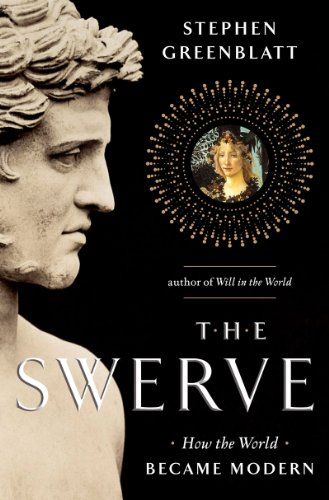
One cold winter night in 1417, the clean-shaven, slender young man pulled a manuscript off a dusty library shelf and could barely believe his eyes. In his hands was a thousand-year-old text that changed the course of human thought — the last surviving manuscript of On the Nature of Things, a seminal poem by Roman philosopher Lucretius, full of radical ideas about a universe operating without gods and that matter made up of minuscule particles in perpetual motion, colliding and swerving in ever-changing directions. With Bracciolini’s discovery began the copying and translation of this powerful ancient text, which in turn fueled the Renaissance and inspired minds as diverse as Shakespeare, Galileo, Thomas Jefferson, Einstein and Freud.
In The Swerve: How the World Became Modern, acclaimed Renaissance scholar Stephen Greenblatt tells the story of Bracciolini’s landmark discovery and its impact on centuries of human intellectual life, laying the foundations for nearly everything we take as a cultural given today.
“This is a story [of] how the world swerved in a new direction. The agent of change was not a revolution, an implacable army at the gates, or landfall of an unknown continent. […] The epochal change with which this book is concerned — though it has affected all our lives — is not so easily associated with a dramatic image.”
Central to the Lucretian worldview was the idea that beauty and pleasure were worthwhile pursuits, a notion that permeated every aspect of culture during the Renaissance and has since found its way to everything from design to literature to political strategy — a worldview in stark contrast with the culture of religious fear and superstitions pragmatism that braced pre-Renaissance Europe. And, as if to remind us of the serendipitous shift that underpins our present reality, Greenblatt writes in the book’s preface:
“It is not surprising that the philosophical tradition from which Lucretius’ poem derived, so incompatible with the cult of the gods and the cult of the state, struck some, even in the tolerant culture of the Mediterranean, as scandalous […] What is astonishing is that one magnificent articulation of the whole philosophy — the poem whose recovery is the subject of this book — should have survived. Apart from a few odds and ends and secondhand reports, all that was left of the whole rich tradition was contained in that single work. A random fire, an act of vandalism, a decision to snuff out the last trace of views judged to be heretical, and the course of modernity would have been different.”
Illuminating and utterly absorbing, The Swerve is as much a precious piece of history as it is a timeless testament to the power of curiosity and rediscovery. In a world dominated by the newsification of culture where the great gets quickly buried beneath the latest, it’s a reminder that some of the most monumental ideas might lurk in a forgotten archive and today’s content curators might just be the Bracciolinis of our time, bridging the ever-widening gap between accessibility and access.
3. RADIOACTIVE
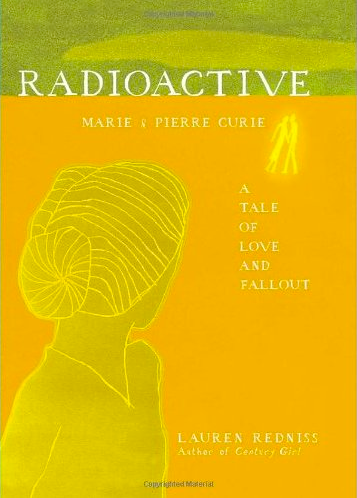
Wait, how can a book be among the year’s best art and design books, best science books, and best history books? Well, if it’s Radioactive: Marie & Pierre Curie: A Tale of Love and Fallout, it can. In this cross-disciplinary gem, artist Lauren Redniss tells the story of Marie Curie — one of the most extraordinary figures in the history of science, a pioneer in researching radioactivity, a field the very name for which she coined, and not only the first woman to win a Nobel Prize but also the first person to win two Nobel Prizes, and in two different sciences — through the two invisible but immensely powerful forces that guided her life: radioactivity and love. Granted, the book was also atop my omnibus of the year’s best art and design books — but that’s because it’s truly extraordinary — a remarkable feat of thoughtful design and creative vision.
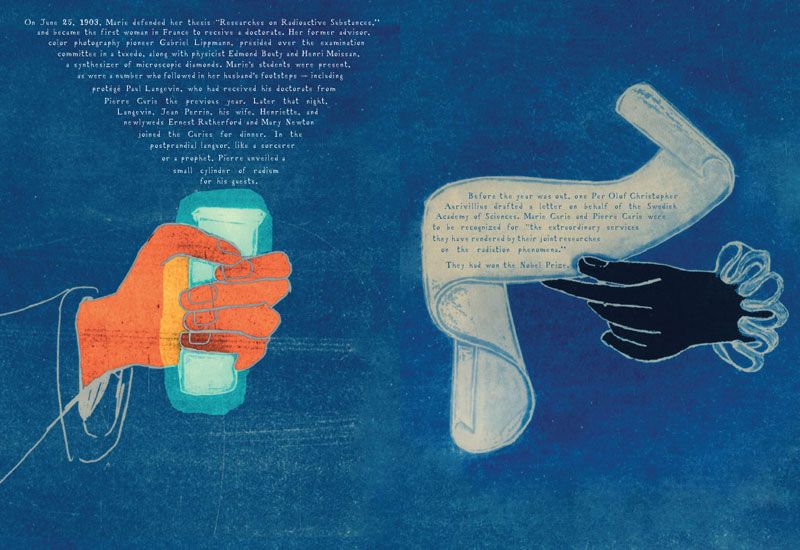
To honor Curie’s spirit and legacy, Redniss rendered her poetic artwork in cyanotype, an early-20th-century image printing process critical to the discovery of both X-rays and radioactivity itself — a cameraless photographic technique in which paper is coated with light-sensitive chemicals. Once exposed to the sun’s UV rays, this chemically-treated paper turns a deep shade of blue. The text in the book is a unique typeface Redniss designed using the title pages of 18th- and 19th-century manuscripts from the New York Public Library archive. She named it Eusapia LR, for the croquet-playing, sexually ravenous Italian Spiritualist medium whose séances the Curies used to attend. The book’s cover is printed in glow-in-the-dark ink.

Redniss tells a turbulent story — a passionate romance with Pierre Curie (honeymoon on bicycles!), the epic discovery of radium and polonium, Pierre’s sudden death in a freak accident in 1906, Marie’s affair with physicist Paul Langevin, her coveted second Noble Prize — under which lie poignant reflections on the implications of Curie’s work more than a century later as we face ethically polarized issues like nuclear energy, radiation therapy in medicine, nuclear weapons and more.
Full review, with more images and Redniss’s TEDxEast talk, here.
4. HEDY’S FOLLY
Hedy’s Folly: The Life and Breakthrough Inventions of Hedy Lamarr, the Most Beautiful Woman in the World tells the fascinating story of a Hollywood-starlet-turned-inventor whose radio system for remote-controlling torpedoes laid the foundations for technologies like wifi and Bluetooth. But her story is also one of breaking free of society’s expectations for what inventors should be and look like. After our recent review, reader Carmelo “Nino” Amarena, an inventor himself, who interviewed Lamarr in 1997 shortly before her death, captures this friction in an email:
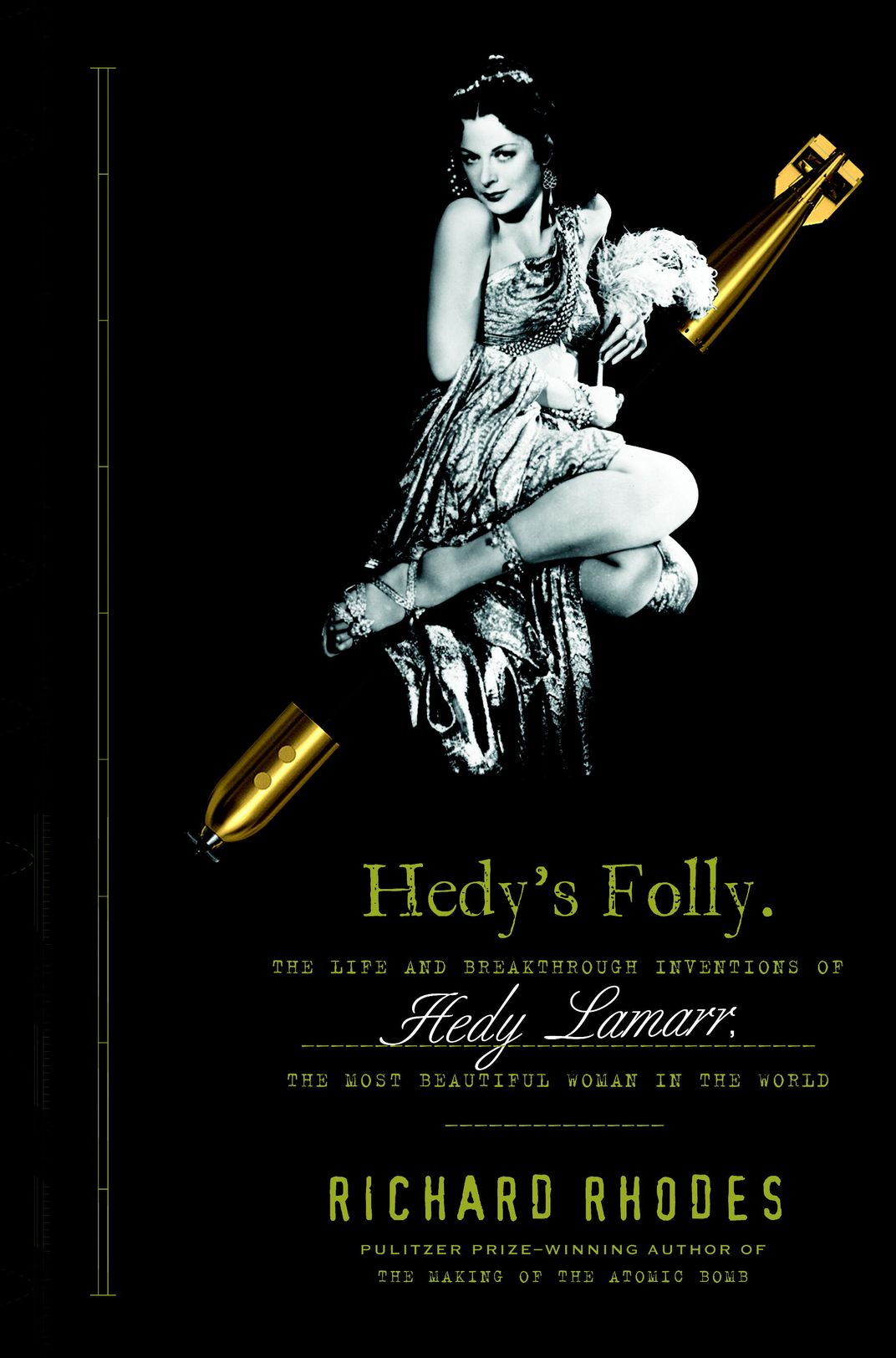
“Ever since I found out back in 1989 that Hedy had invented Spread Spectrum (Frequency Hopping type only), I followed her career historically until her death. My interview with her is one of the most notable memories I have of speaking with an inventor, and as luck would have it, she was underestimated for nearly 60 years on the smarts behind her beauty. One of the things she said to me in our 1997 talk was, ‘my beauty was my curse, so-to-speak, it created an impenetrable shield between people and who I really was’. I believe we all have our own version of Hedy’s curse and trying to overcome it could take a lifetime.”
In 1937, the dinner table of Fritz Mandl — an arms dealer who sold to both sides during the Spanish Civil War and the third richest man in Austria — entertained high-ranking Nazi officials who chatted about the newest munitions technologies. Mandl’s wife, a twenty-four-year-old former movie star, whom he respected but also claimed “didn’t know A from Z,” sat quietly listening. Hedy Kiestler, whose parents were assimilated Jews, and who would be rechristened by Louis B. Meyer as Hedy Lamarr, wanted to escape to Hollywood and return to the screen. From these dinner parties, she knew about about submarines and wire-guided torpedoes, about the multiple frequencies used to guide bombs. She knew that she had present herself as the glamorous wife of an arms dealer. And she knew that in order to leave her husband, she would have to take a good amount of this information with her.

Hedy’s story is intertwined with that of American composer George Antheil, who lived during the 1920s with his wife in Paris above the newly opened Shakespeare and Company, and who could count among his friends Man Ray, Ezra Pound, Louise Bryant, and Igor Stravinsky. When Antheil attended the premiere of Stravinsky’s Les Noces, the composer invited him afterward to a player piano factory, where he wished to have his work punched out for posterity. There, Antheil conceived of a grand composition for sixteen player pianos, bells, sirens, and several airplane propellers, which he called his Ballet mecanique. When he premiered the work in the US, the avant-garde composition proved a disaster.
Antheil and his wife decamped for Hollywood, where he attempted to write for the screen. When Antheil met Hedy, now bona fide movie star, in the summer of 1940 at a dinner held by costume designer Adrian, they began talking about their interests in the war and their backgrounds in munitions (Antheil had been a young inspector in a Pennsylvania munitions plant during World War I.) Hedy had been horrified by the German torpedoing of two ships carrying British children to Canada to avoid the Blitz, and she had begun to think about a way to control a torpedo remotely, without detection.
Hedy had the idea for a radio that hopped frequencies and Antheil had the idea of achieving this with a coded ribbon, similar to a player piano strip. A year of phone calls, drawings on envelopes, and fiddling with models on Hedy’s living room floor produced a patent for a radio system that was virtually jam-proof, constantly skipping signals.
Antheil responded to Hedy’s enthusiasm, although he thought her sometimes scatterbrained, and Hedy to Antheil’s mechanical focus as a composer. The two were always just friends and respected one another’s quirks. Antheil wrote to a friend about a new scheme Hedy was planning with Howard Hughes:
“Hedy is a quite nice, but mad, girl who besides being very beautiful indeed spends most of her spare time inventing things—she’s just invented a new ‘soda pop’ which she’s patenting—of all things!”
Hedy’s Folly isn’t the story of a science prodigy or a movie star with a few hobbies, it’s a star-studded picaresque about two undeniably creative people whose interests and backgrounds unlocked the best in one another — the mark of true inventors.
Adapted from Michelle Legro’s fantastic full review.
5. IN THE PLEX
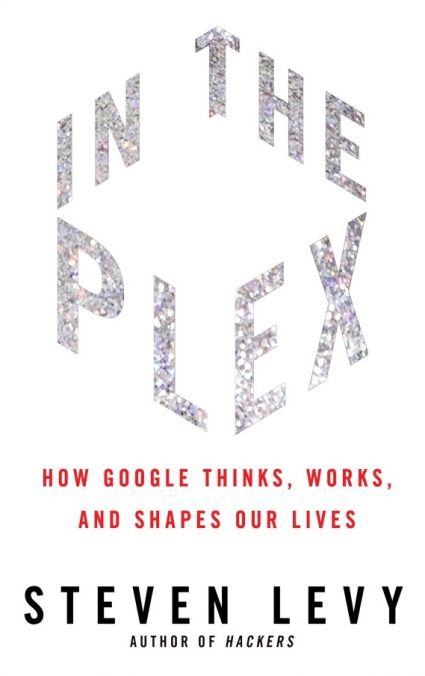
Earlier this year, we looked at 7 essential books on the future of the Internet, how the iPhone changed everything and why Google’s algorithms might be stunting our intellectual growth. But there’s hardly a better way to understand the future of information and the web than by understanding how Google — the algorithm, the company, the ethos — changed everything. That’s exactly what acclaimed technology writer Steven Levy, he of Hackers fame, does in In The Plex: How Google Thinks, Works, and Shapes Our Lives — a sweeping look at how Google went from a startup headquartered above a Palo Alto bike shop to a global brand bigger than GE.
Levy, who has been covering the computing revolution for the past 30 years for titles like Newsweek and Wired, had developed a personal relationship with Larry Page and Sergey Brin, which granted him unprecedented access to the inner workings of the Big G, a company notorious for its caution with journalists. The result is a fascinating journey into the soul, culture and technology of our silent second brain, from Page and Brin’s legendary eccentricities that shaped the company’s creative culture to the uncompromising engineering genius that underpins its services. But most fascinating of all is the grace and insight with which Levy examines not only how Google has changed, but also how it has changed us and how, in the face of all these interconnected metamorphoses, it hopes to preserve its soul — all the while touching on timely topics like privacy, copyright law and censorship.
Levy, who calls himself “an outsider with an insider’s view,” recounts the mysteries he saw in Google, despite a decade of covering the company, which inspired his book:
Google was a company built on the values of its founders, who harbored ambitions to build a powerful corporation that would impact the entire world, at the same time loathing the bureaucracy and commitments that running such a company would entail. Google professed a sense of moral purity — as exemplified by its informal motto, ‘Don’t be evil’ — but it seemed to have a blind spot regarding the consequences of its own technology on privacy and property rights. A bedrock principle of Google was serving its users — but a goal was building a giant artificial intelligence learning machine that would bring uncertain consequences to the way all of us live. From the very beginning, its founders said that they wanted to change the world. But who were they, and what did they envision this new world order to be?” ~ Steven Levy
Levy’s intimate account of Google’s inner tensions offers a sober look delivered with a kind of stern fatherly tenderness, brimming with its own opposing forces of his clear affection for Page and Brin coupled with his, at times begrudging, fairness in writing about Google’s shortcomings.
What I discovered was a company exulting in creative disorganization, even if the creativity was not always as substantial as hoped for. Google had massive goals, and the entire company channeled its values from the founders. Its mission was collecting and organizing all the world’s information — and that’s only the beginning. From the very start, its founders saw Google as a vehicle to realize the dream of artificial intelligence in augmenting humanity. To realize their dreams, Page an Brin had to build a huge company. At the same time, they attempted to maintain as much as possible the nimble, irreverent, answer-to-no-one freedom of a small start-up. In the two years I researched this book, the clash between those goals reached a peak, as David had become a Goliath.” ~ Steven Levy
Besides the uncommon history of Google, Levy reveals a parallel history of the evolution of information technology itself, a sobering invitation to look at the many technologies we’ve come to take for granted with new eyes. (Do you remember the days when you plugged a word into your search engine and it spat back a wildly unordered selection of results, most of which completely irrelevant to your query? Or when the most generous free web mail offered you the magnanimous storage space of four megabytes?)
Originally featured, with video, in August.
6. BOOKS: A LIVING HISTORY
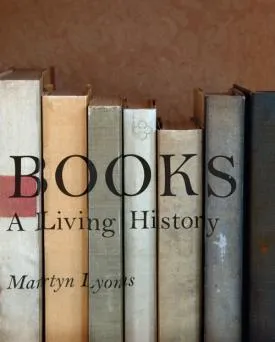
What is an omnibus about history books without a book about the history of books? We’ve previously explored how books have been made from the Middle Ages to today, what the future might have in store for them, and why analog books still enchant us. In Books: A Living History, Australian historian Martyn Lyons (of A History of Reading and Writing in the Western World fame) explores how books became one of the most efficient and enduring information technologies ever invented — something we seem to forget in an era plagued by techno-dystopian alarmism about the death of books. Both a cultural time-capsule and an encyclopedia of bibliophilia, Lyons offers an invaluable record of our collective intellectual and informational journey across two millennia of written language and a profound peer into its future.
“It is difficult now to imagine how some of the great turning points in Western history could have been achieved without [the book]. The Renaissance, the Reformation, the Scientific Revolution and the Age of Enlightenment all relied on the printed word for their spread and permanent influence. For two and a half millennia, humanity used the book, in its manuscript or printed form, to record, to administer, to worship and to educate.” ~ Martyn Lyon
“Defining the book itself is a risky operation. I prefer to be inclusive rather than exclusive, and so I offer a very loose definition. The book, for example, does not simply exist as a bound text of sheets of printed paper — the traditional codex with which we are most familiar today. Such a definition forgets two millennia of books before print, and the various forms that textual communication took before the codex was invented.
“A traditional definition based only on the codex would also exclude hypertext and the virtual book, which have done away with the book’s conventional material support. I prefer to embrace all these forms, from cuneiform script to the printed codex to the digitized electronic book, and to trace the history of the book as far back as the invention of writing systems themselves. The term ‘book’, then, is a kind of shorthand that stands for many forms of written textual communication adopted in past societies, using a wide variety of materials.” ~ Martyn Lyons
From the first papyrus scrolls to the painstakingly made illuminated manuscripts of the Middle Ages to today’s ebooks and the iPad, Lyons distills the history and evolution of books in the context of a parallel cultural evolution and, as in the case of Gutenberg’s printing press, revolution.
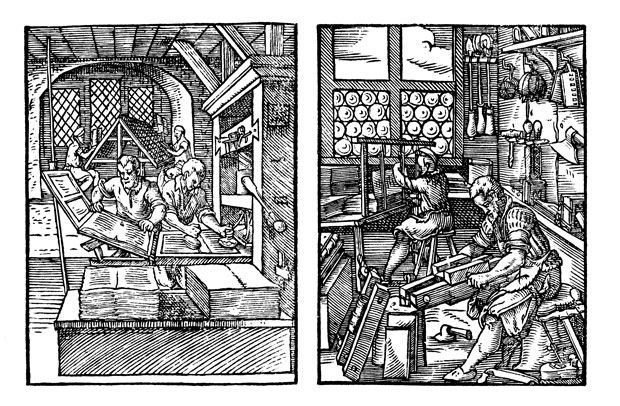
Navigating through 2,000 gloriously illustrated years of literary milestones, genres, and groundswells, from serial and dime novels to paperbacks to manga, Lyons ends with a bittersweet contemplation of the fate of the book and the bibliophile after the turn of the digital century.
Originally reviewed, with more images, here.
7. 1493
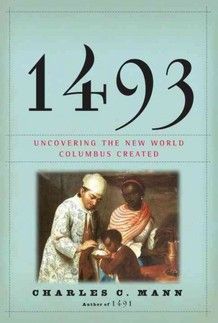
In 2005, 1491: New Revelations of the Americas Before Columbus by Charles C. Mann came to be regarded as the most ambitious and sweeping look at pre-Columbus North and South America ever published. This year, Mann came back with 1493: Uncovering the New World Columbus Created — a fascinating look at one of the lesser-known, lesser-considered aspects of what happened when Columbus and his crew set foot on American soil: the environmental upheaval that began as they brought plants, animals and diseases that forever changed the local biosphere, both in America and in Europe once the explorers returned to the Old World. Known as The Columbian Exchange, this process is considered the most important ecological event since the extinction of the dinosaurs, and the paradoxes at its heart echo today’s polarized views of globalization as either a great cross-pollinator or a great contaminator of cultures.
“From the outset globalization brought enormous economic gains and ecological and social tumult that threatened to offset those gains. It is true that our times are different from the past. Our ancestors did not have the Internet, air travel, genetically modified crops, or computerized international stock exchanges. Still, reading the accounts of the creation of the world market one cannot help hearing echoes — some muted, some thunderously loud — of the disputes now on the television news. Events four centuries ago set a template for events we are living through today.”
Mann illustrates the fascinating interplay of organisms within ecological systems and the intricate yet powerful ways in which it impacts human civilization. For instance, when the Spaniards brought plantains to South America, they also brought the tiny scaling insects that live in their roots, which turned out to be delicious new food for the local fire ants. This led to a plague-sized explosion in fire ant population, which forced the terrified Spaniards to live on the roofs of their ant-infested houses and eventually drove them off the islands.
The most striking impact of The Columbian Exchange, however, comes from epidemiology. Because pre-Columbus America had no domesticated animals, it also had no animal-borne diseases. But when the Europeans came over, they brought with them enough disease to wipe out between two thirds and 90% of people in the Americas over the next 150 years — the worst demographic catastrophe in history by a long stretch. While early diaries mentioned these epidemics in describing life in the 1500s and 1600, it wasn’t until the 1960s that epidemiologists and historians realized the true scale of the death toll in the decades following Columbus’s arrival.
NPR’s Fresh Air has an excellent interview with Mann.
From how tobacco became the world’s first global commodity to how forests were transformed by a new earthworm, 1493 will change the way you look at ecology, economy and epidemiology, and radically shift how you think about “local” and “global.”
Originally featured here in August and excerpted in Smithsonian magazine’s November 2011 issue.
8. WHEELS OF CHANGE
National Geographic’s Wheels of Change: How Women Rode the Bicycle to Freedom (With a Few Flat Tires Along the Way), which also happens to be one of the year’s best photography, tells the riveting story of how the two-wheel wonder pedaled forward the emancipation of women in late-nineteenth-century America and radically redefined the normative conventions of femininity. (Not to be confused with another excellent tome that came out this year, It’s All About the Bike: The Pursuit of Happiness on Two Wheels, which offers a more general chronicle of the bike’s story, from its cultural history to its technical innovation to the fascinating, colorful stories of the people who ride it.)
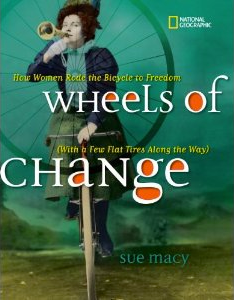
To men, the bicycle in the beginning was merely a new toy, another machine added to the long list of devices they knew in their work and play. To women, it was a steed upon which they rode into a new world.” ~ Munsey’s Magazine, 1896
A follow-up to Sue Macy’s excellent Winning Ways: A Photohistory of American Women in Sports, published nearly 15 years ago, the book weaves together fascinating research, rare archival images, and historical quotes that bespeak the era’s near-comic fear of the cycling revolution. (“The bicycle is the devil’s advance agent morally and physically in thousands of instances.”)
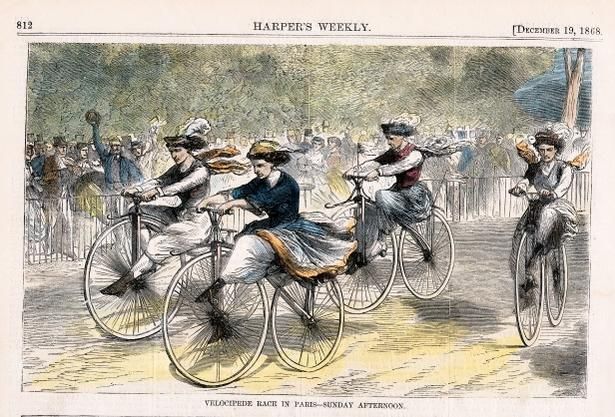
From allowing young people to socialize without the chaperoning of clergymen and other merchants of morality to finally liberating women from the constraints of corsets and giant skirts (the “rational dress” pioneered by bike-riding women cut the weight of their undergarments to a “mere” 7 pounds), the velocipede made possible previously unthinkable actions and interactions that we now for granted to the point of forgetting the turbulence they once incited.
“Success in life depends as much upon a vigorous and healthy body as upon a clear and active mind.” ~ Elsa von Blumen, American racer, 1881
Let me tell you what I think of bicycling. I think it has done more to emancipate women than anything else in the world. I stand and rejoice every time I see a woman ride by on a wheel.” ~ Susan B. Anthony, 1896
Many [female cyclists on cigar box labels] were shown as decidedly masculine, with hair cut short or pulled back, and smoking cigars, then an almost exclusively male pursuit. This portrayal reflected the old fears that women in pants would somehow supplement men as breadwinners and decision-makers.” ~ Sue Macy
Originally featured here in March and discussed in Smithsonian’s Off the Road blog in December.
9. HARK! A VAGRANT
History doesn’t have to always take itself seriously. From New Yorker cartoonist Kate Beaton comes Hark! A Vagrant — a witty and wonderful collection of comics about historical and literary figures and events, based on her popular web comic of the same name. Scientists and artists, revolutionaries and superheroes, suffragists and presidents — they’re all there, as antique hipsters, and they’re all skewered with equal parts comedic and cerebral prod.

Beaton, whose background is in history and anthropology, has a remarkable penchant for conveying the momentous through the inane, aided by a truly special gift for simple, subtle, incredibly expressive caricature. From dude spotting with the Brontë Sisters to Nikola Tesla and Jane Austen dodging groupies, the six-panel vignettes will make you laugh out loud and slip you a dose of education while you aren’t paying attention.
I think comics about topics like history or literature can be amazing educational tools, even at their silliest. So if you learn or look up a thing or two after reading these comics, and you’ve enjoyed them, then I will be more than pleased! If you’re just in it for the silly stuff, then there is plenty of that to go around, too.” ~ Kate Beaton
Beaton is also a masterful writer, her dialogue and captions adding depth to what’s already an absolute delight.
Handsome and hilarious, the six-panel stories in Hark! A Vagrant will undo all the uptightness about history instilled in you by academia, leaving you instead with a hearty laugh and some great lines for dinner party banter.
10. THE MAN OF NUMBERS
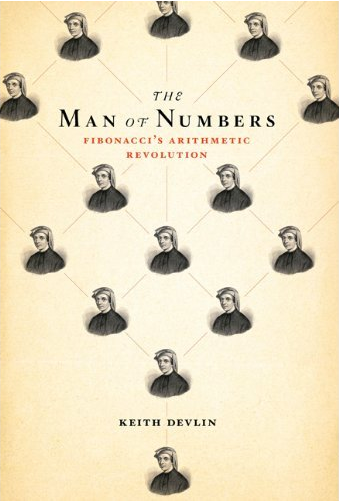
Imagine a day without numbers — how would you know when to wake up, how to call your mother, how the stock market is doing, or even how old you are? We live our lives by numbers. So fundamental are they to our understanding of the world that we’ve grown to take them for granted. And yet it wasn’t always so. Until the 13th century, even simple arithmetic was accessible almost exclusively to European scholars. Merchants kept track of quantifiables using Roman numerals, performing calculations either by an elaborate yet widespread fingers procedure or with a clumsy mechanical abacus. But in 1202, a young Italian man named Leonardo da Pisa — known today as Fibonacci — changed everything when he wrote Liber Abbaci, Latin for Book of Calculation, the first arithmetic textbook of the West.
Keith Devlin tells his incredible and important story in The Man of Numbers: Fibonacci’s Arithmetic Revolution, also one of the year’s best science books, tracing how Fibonacci revolutionized everything from education to economics by making arithmetic available to the masses. If you think the personal computing revolution of the 1980s was a milestone of our civilization, consider the personal computation revolution. And yet, de Pisa’s cultural contribution is hardly common knowledge.
The change in society brought about by the teaching of modern arithmetic was so pervasive and all-powerful that within a few generations people simply took it for granted. There was no longer any recognition of the magnitude of the revolution that took the subject from an obscure object of scholarly interest to an everyday mental tool. Compared with Copernicus’s conclusions about the position of Earth in the solar system and Galileo’s discovery of the pendulum as a basis for telling time, Leonardo’s showing people how to multiply 193 by 27 simply lacks drama.” ~ Keith Devlin
Though “about” mathematics, Fibonacci’s story is really about a great number of remarkably timely topics: gamification for good (Liber abbaci brimmed with puzzles and riddles like the rabbit problem to alleviate the tedium of calculation and engage readers with learning); modern finance (Fibonacci was the first to develop an early form of present-value analysis, a method for calculating the time value of money perfected by iconic economist Irving Fisher in the 1930s); publishing entrepreneurship (the first edition of Liber Abbaci was too dense for the average person to grasp, so da Pisa released — bear in mind, before the invention of the printing press — a simplified version accessible to the ordinary traders of Pisa, which allowed the text to spread around the world); abstract symbolism (because numbers, as objective as we’ve come to perceive them as, are actually mere commonly agreed upon abstractions); and even remix culture (Liber Abbaci was assumed to be the initial source for a great deal of arithmetic bestsellers released after the invention of the printing press.)
Above all, however, Fibonacci’s feat was one of storytelling — much like TED, he took existing ideas that were far above the average person’s competence and grasp, and used his remarkable expository skills to make them accessible and attractive to the common man, allowing these ideas to spread far beyond the small and self-selected circles of the scholarly elite.
A book about Leonardo must focus on his great contribution and his intellectual legacy. Having recognized that numbers, and in particular powerful and efficient ways to compute with them, could change the world, he set about making that happen at a time when Europe was poised for major advances in science, technology, and commercial practice. Through Liber Abbaci he showed that an abstract symbolism and a collection of seemingly obscure procedures for manipulating those symbols had huge practical applications.” ~ Keith Devlin
For an added layer of fascinating, there’s also a complementary ebook titled Leonardo and Steve, drawing a curious parallel between Fibonacci and Steve Jobs.
Originally featured, with a Kindle preview, in July.
11. MASTERS OF MYSTERY
As far as unlikely friendships go, it hardly gets any unlikelier than that between Sherlock Holmes creator Sir Arthur Conan Doyle and legendary illusionist Harry Houdini. Born fifteen years apart into dramatically different families, one the educated product of a proper Scottish upbringing and the other the self-made son of a Hungarian immigrant, the two even stood in stark physical contrast, once likened by a journalist to Pooh and Piglet.
But when they met in 1920, something extraordinary began. In Masters of Mystery: The Strange Friendship of Arthur Conan Doyle and Harry Houdini, acclaimed pop culture biographer Christopher Sandford tells the story of the pair’s unique friendship, sometimes macabre, sometimes comic, and fundamentally human, underpinned by their shared longing for lost loved ones and their adventures in the world of Spiritualism — at the time, a world with unmatched popular allure.
From Queen Victoria to W. B. Yeats to Charles Dickens to Abraham Lincoln, even the era’s political, scientific, and artistic elite engaged in efforts to reach departed loved ones in worlds unseen. By the time Houdini arrived in America in 1878, more than 11 million people admitted to being Spiritualists. Spiritualism, of course, wasn’t a new idea at the time. The notion that the soul survives intact after physical death and lives on on another plane, Sandford reminds us, could be traced back at least as far back as the writings of Swedish mystic-philosopher Emanuel Swedenborg in the mid-18th century. His Arcana Coelestia (“Heavenly Secrets”) made an eight-volume case for the supernatural and provoked a published retort from Immanuel Kant, who pronounced Swedenborg’s opinions “nothing but illusions.”
This notion of illusion as a central part of Spiritualism turned out to be a central binding element for Houdini and Conan Doyle — one bringing to it the skepticism of a man making a living out of illusions and the other finding in it a saving grace of sorts.
Spiritualism is nothing more or less than mental intoxication; Intoxication of any sort when it becomes a habit is injurious to the body, but intoxication of the mind is always fatal to the mind.” ~ Harry Houdini
Houdini even called for a law that would “prevent these human leeches from sucking every bit of reason and common sense from their victims.” Still, when his father died, the 18-year-old Houdini sold his own watch to pay for a “professional psychic reunion” with the departed. In 1920, Houdini went on a six-month tour in Europe, attending more than a hundred séances. He wanted, desperately, to believe — but, himself professional skeptic in the business of fooling people, he never quite managed to suspend his disbelief. In fact, he became the Penn & Teller of his day, seeing it as his duty to myth-bust psychics and other prophets of Spiritualism.
Conan Doyle, at first, seemed only interested in Spiritualism for its narrative potential, rather than “to change people’s hearts and minds,” as Sandford puts it. But after his father died when the author was only 34 and, mere months later, his wife was diagnosed with tuberculosis and given only a few months to live, Conan Doyle fell into a deep depression. Shortly thereafter, in 1893, he applied to join the Society for Psychical Research, a committee of academics aiming to study Spiritualism “without prejudice or prepossession.” Eventually, he gave up his lucrative literary career, killed off Sherlock Holmes, and dedicated himself wholly to his obsession with Spiritualism with, as we’ve already seen in this rare footage from 1930, reached a manically obsessive proportion by his old age.
Yet, despite their passionate and diametrically opposed views on Spiritualism, the Conan Doyle and Houdini had something intangible but powerful in common. Walter Prince, an ordained minister and a member of the SPR in the 1920s, put it this way:
The more I reflect on Houdini [and] Doyle, the more it seems that the two men resembled each other. Each was a fascinating companion, each big-hearted and generous, yet each was capable of bitter and emotional denunciation, each was devoted to his home and family, each felt himself an apostle of good to men, the one to rid them of certain beliefs, the other to inculcate in them those beliefs.”
Originally featured here earlier this month.
This post appears courtesy of Brain Pickings, where it was originally published.